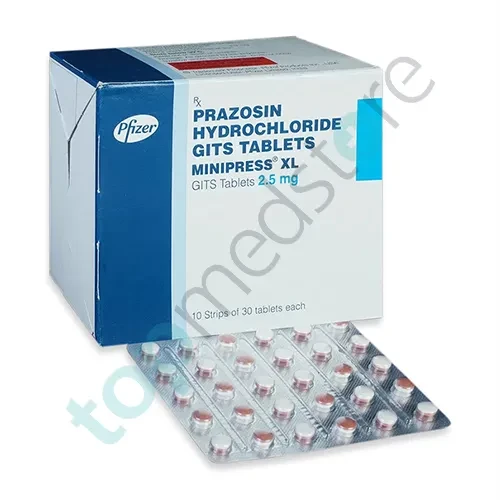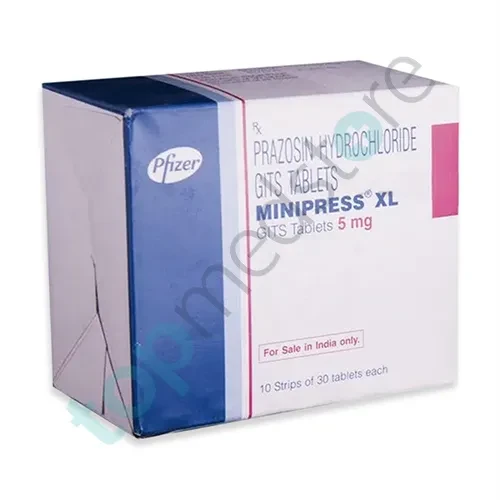
Prazosin ER 5mg
$88.20 – $288.00
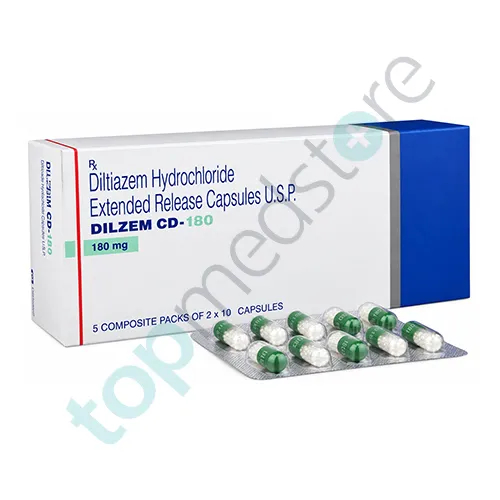
| Product name | Diltiazem 180mg CD |
|---|---|
| Active Ingredient | Diltiazem |
| Dosage | CD 180mg |
| Drug Type | Capsules |
| Indication | Hypertension |
| Manufacturer | Torrent Pharmaceuticals Ltd |
Total $34.80
Diltiazem 180mg CD (Controlled Delivery) is a prescription calcium channel blocker medicine used to treat high blood pressure, chest pain (angina), and certain irregular heart rhythms. It is commonly prescribed by a cardiologist or physician.
The “CD” means controlled delivery, which means the medicine is released slowly in the body over time to provide long-lasting effect and stable blood pressure control.
In simple words, Diltiazem helps relax blood vessels and improves blood flow so blood pressure reduces and the heart works more smoothly.
Blood pressure increases when blood vessels become tight or when the heart has to work harder to pump blood.
Inside the body, muscle contraction depends on calcium movement into muscle cells. When too much calcium enters these cells, blood vessels become tighter and the heart may beat faster or with more force.
Diltiazem works by blocking calcium entry into the muscle cells of blood vessels and the heart. This helps relax the blood vessels and reduces the force of heart contractions.
When blood vessels relax, blood flows more easily, and blood pressure comes down. At the same time, the heart does not need to work as hard, which reduces chest pain and improves oxygen supply to the heart.
In simple words, this medicine relaxes blood vessels and reduces heart workload so blood pressure and chest pain improve.
Diltiazem 180mg CD is mainly used for the treatment of high blood pressure (hypertension).
It is also used for angina (chest pain caused by reduced blood flow to the heart muscles), where it helps improve oxygen supply to the heart.
Doctors may prescribe it for certain heart rhythm disorders (irregular heartbeat conditions where the heart beats too fast or unevenly).
It may also be used when long-term and stable control of blood pressure is required to reduce the risk of heart-related complications.
In clinical practice, a cardiologist uses this medicine when smooth and sustained heart and blood vessel relaxation is needed for better cardiovascular control.
Diltiazem belongs to a class of medicines called calcium channel blockers (medicines that reduce calcium entry into heart and blood vessel muscle cells).
By blocking calcium channels, it relaxes the smooth muscles of blood vessels, allowing them to widen. This lowers resistance in blood flow and reduces blood pressure.
It also slows down the heart rate and reduces the force of heart contractions. This helps decrease the heart’s oxygen demand, which is useful in angina.
The controlled delivery form releases the medicine slowly, ensuring stable levels in the body throughout the day.
In simple words, this medicine helps the heart and blood vessels relax so blood flows smoothly and pressure reduces steadily.
Some people may experience headache, dizziness, or lightheadedness, especially when blood pressure starts lowering.
There may be swelling in the ankles or feet (fluid retention caused by widened blood vessels).
Some individuals may feel fatigue or weakness, especially during the early phase of treatment.
In some cases, slow heart rate (bradycardia, meaning the heart beats slower than normal) may occur.
Occasionally, flushing (warmth or redness of the skin) can happen due to increased blood flow.
Most side effects are mild and often improve as the body adjusts to the medicine.
This medicine should be used only under the supervision of a cardiologist or physician.
Regular monitoring of blood pressure and heart rate is important during treatment.
Avoid suddenly stopping the medicine, as it may worsen heart-related symptoms.
Be careful while standing up quickly, as it may cause dizziness due to lowered blood pressure.
Inform your doctor if you have heart failure, liver disease, or very low blood pressure before starting treatment.
Avoid grapefruit or grapefruit juice, as it may affect how the medicine works in the body.
Following medical advice ensures safe and effective long-term use.
This content is for informational purposes only and does not replace medical advice, diagnosis, or treatment. Always consult your cardiologist or physician before starting or changing any medicine.
$88.20 – $288.00
$87.00 – $284.00
$28.50 – $93.60
$39.90 – $130.80