Rosuvastatin 20mg
$15.00 – $49.20
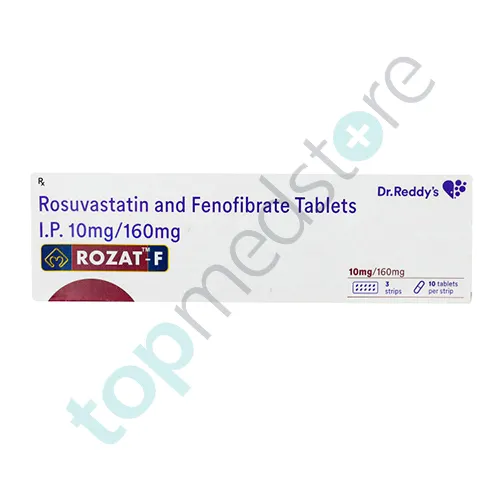
| Product name | Rosuvastatin-Fenofibrate 10mg-160mg |
|---|---|
| Active Ingredient | Rosuvastatin-Fenofibrate |
| Dosage | 10mg-160mg |
| Drug Type | Tablets |
| Indication | Mixed Dyslipidemia |
| Manufacturer | Dr.Reddy's |
Rosuvastatin-Fenofibrate 10mg-160mg Tablets
In stock
Total $242.00
Rosuvastatin–Fenofibrate 10mg–160mg is a prescription combination medicine used to manage high cholesterol and high triglycerides in the blood. It contains two active ingredients: Rosuvastatin (10mg) and Fenofibrate (160mg). Both medicines work together to improve abnormal fat levels, also called lipid imbalance.
Rosuvastatin belongs to the statin group, and Fenofibrate belongs to the fibrate group. These two classes target different types of blood fats, which makes this combination stronger for patients with mixed lipid problems.
Doctors such as a cardiologist or internal medicine specialist prescribe this medicine after checking lipid profile reports and assessing heart risk factors.
This medicine is not for quick relief. It is used as a long-term cholesterol control therapy to protect heart and blood vessels.
Rosuvastatin–Fenofibrate 10mg–160mg works inside the body by controlling different fat pathways in the blood.
Rosuvastatin acts mainly in the liver. It reduces the production of LDL cholesterol (bad cholesterol) by blocking an enzyme involved in cholesterol formation. When less cholesterol is made, the body starts using existing cholesterol from the bloodstream.
Fenofibrate works mainly on triglycerides, another harmful fat in the blood. It increases the breakdown and removal of triglycerides and helps the body use fat more efficiently.
Together, both medicines improve the overall lipid profile, lowering bad fats and improving heart-friendly fat balance. This reduces the buildup of fat in arteries and supports better blood circulation and heart function.
Rosuvastatin–Fenofibrate 10mg–160mg is mainly used for treating mixed dyslipidemia, a condition where both cholesterol and triglycerides are high.
It is prescribed when lifestyle changes like diet control and exercise are not enough to manage lipid levels.
Doctors use this medicine in patients with high LDL cholesterol, high triglycerides, or low HDL cholesterol (good cholesterol).
It is also used in people with diabetes, obesity, metabolic syndrome, or a family history of heart disease, where fat imbalance increases cardiovascular risk.
This medicine helps reduce the risk of serious heart problems such as heart attack, stroke, and blocked arteries (atherosclerosis).
It is part of a preventive heart care treatment plan that focuses on long-term protection of the cardiovascular system.
Rosuvastatin–Fenofibrate works through a dual-action mechanism that targets both cholesterol and triglycerides.
Rosuvastatin blocks the enzyme HMG-CoA reductase in the liver. This enzyme is responsible for cholesterol production. When blocked, the liver produces less LDL cholesterol, which reduces harmful fat levels in the blood.
Fenofibrate activates a receptor in the body called PPAR-alpha (Peroxisome Proliferator-Activated Receptor Alpha). This receptor helps increase fat breakdown, especially triglycerides, and improves their removal from the bloodstream.
Fenofibrate also helps raise HDL cholesterol (good cholesterol) in some patients, which supports heart protection by helping remove excess fat from arteries.
Because both medicines work in different ways, they provide strong and balanced lipid control compared to single-drug therapy.
Like all prescription medicines, Rosuvastatin–Fenofibrate 10mg–160mg may cause side effects, although not everyone experiences them.
Common side effects include muscle pain, mild weakness, headache, nausea, and stomach discomfort. These effects are usually temporary and improve as the body adjusts.
Some patients may experience changes in liver enzyme levels, so doctors often recommend regular blood tests to monitor liver health during treatment.
In rare cases, muscle-related complications such as severe muscle pain or weakness may occur. A very rare condition called rhabdomyolysis (muscle breakdown) can also happen and requires immediate medical attention.
If symptoms like dark urine, severe fatigue, or unexplained muscle pain appear, medical help should be taken immediately.
This content is for educational purposes only and is not a substitute for professional medical advice. Rosuvastatin–Fenofibrate 10mg–160mg should only be taken under the supervision of a qualified healthcare professional such as a cardiologist or physician. Do not start, stop, or change the dose without medical guidance. Regular monitoring of lipid levels and liver function is important for safe and effective treatment.
$15.00 – $49.20
$112.20 – $367.20
$39.90 – $130.80
$47.10 – $154.80