

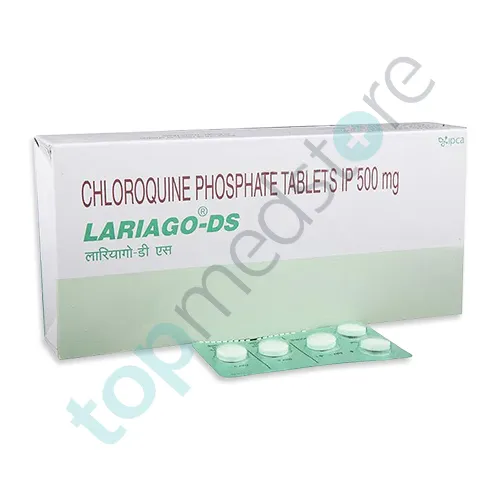
Chloroquine 500mg
$223.80 – $733.20
Quinine is a prescription antimalarial medicine used to treat malaria infection, especially in more severe or resistant cases. Malaria is a serious disease caused by parasites that enter the body through infected mosquito bites. It leads to symptoms like high fever, chills, sweating, headache, and extreme weakness.
Doctors prescribe Quinine tablets or injections when malaria needs stronger treatment or when other antimalarial medicines are not suitable.
A general physician or infectious disease specialist usually prescribes this medicine after confirming malaria through blood tests.
Quinine belongs to the antimalarial drug group.
An antimalarial medicine is a drug that kills malaria-causing parasites in the blood and helps stop the infection.
Quinine works by killing malaria parasites that live inside red blood cells.
After a mosquito bite, malaria parasites enter the blood and start multiplying inside red blood cells. This damages the cells and causes symptoms like fever, chills, and body pain.
Quinine enters infected red blood cells and stops the parasite from growing and multiplying.
It interferes with the parasite’s ability to use hemoglobin, which is needed for survival.
As the parasite weakens and dies, symptoms like fever, chills, sweating, headache, and body weakness gradually reduce.
Quinine is usually used for short-term treatment under medical supervision because it is a strong medicine.
Doctors mainly use Quinine for the treatment of malaria, especially severe malaria or cases where other medicines may not be effective.
It is also used when malaria infection is complicated and needs fast action in a hospital setting.
A general physician or infectious disease specialist may prescribe it as part of combination therapy to improve treatment success.
In some cases, it has been used for nighttime muscle cramps, but this use is limited due to safety concerns and is only under strict medical advice.
Quinine is not used for common fever, viral infections, or routine body aches. It is strictly used for malaria treatment under supervision.
Quinine works by targeting the malaria parasite inside red blood cells.
The parasite feeds on hemoglobin to survive and produces toxic waste inside the cell.
Normally, the parasite removes this waste to stay alive.
Quinine blocks this process and allows toxic substances to build up inside the parasite.
As toxins increase, the parasite becomes weak and eventually dies.
This helps stop the infection from spreading in the bloodstream and reduces symptoms over time.
Because Quinine is a strong medicine, doctors carefully control the dose and treatment duration.
Like all medicines, Quinine may cause side effects. Some are mild, while others may require medical attention.
Common side effects include nausea, vomiting, headache, dizziness, and stomach discomfort.
Nausea means feeling like vomiting.
Vomiting means emptying the stomach through the mouth.
Dizziness means feeling lightheaded or unsteady.
Some people may also experience ringing in the ears, blurred vision, or mild weakness.
Rare but serious side effects include low blood sugar, irregular heartbeat, or severe allergic reactions.
Patients should immediately inform a doctor if they notice vision changes, severe dizziness, or chest discomfort.
A doctor or specialist must supervise treatment to ensure safe use.
This content is for educational purposes only. It does not replace professional medical advice, diagnosis, or treatment. Always consult a doctor or infectious disease specialist before using Quinine. Use this medicine only under proper medical supervision.
| Product name | Quinine |
|---|---|
| Category | Antiprotozoal & Malaria Medicines |
| Shipping offer | Free shipping on orders of $110.00 or more |