
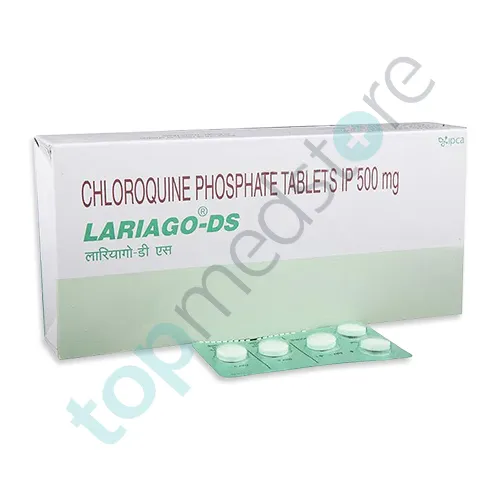
Chloroquine 500mg
$223.80 – $733.20

| Product name | QUININE 300mg |
|---|---|
| Active Ingredient | Quinine |
| Dosage | 300mg |
| Drug Type | Tablets |
| Indication | Malaria |
| Manufacturer | Johnlee Pharma |
Total $32.50
Quinine 300mg is a prescription medicine used mainly to treat malaria, a serious infection caused by parasites that spread through mosquito bites. Malaria can cause high fever, chills, sweating, headache, and body weakness.
Doctors prescribe Quinine 300mg tablets when malaria is confirmed or when other anti-malarial medicines are not suitable or fully effective.
This medicine comes from a natural substance found in the bark of the Cinchona tree. It is one of the oldest known treatments used for malaria.
In modern medicine, Quinine tablets are used carefully because stronger and safer anti-malarial medicines are often preferred first. However, quinine is still important in certain treatment situations.
In some cases, doctors may also use quinine for night-time leg cramps, although this use is less common today and is strictly controlled.
Quinine 300mg works by targeting the malaria parasite inside the red blood cells.
When a mosquito carrying malaria parasites bites a person, the parasites enter the bloodstream and multiply inside red blood cells. This causes fever, chills, and weakness.
Quinine tablets interfere with the parasite’s ability to grow and survive inside the blood cells. This helps stop the infection from spreading further in the body.
By reducing parasite activity, the medicine helps lower fever and improve symptoms of malaria over time.
The medicine does not prevent mosquito bites or stop infection before it starts. It only works after the parasite is already in the body.
Doctors usually combine Quinine 300mg with other medicines to improve effectiveness and reduce the chance of resistance.
Doctors mainly prescribe Quinine 300mg for the treatment of malaria infection. It is especially used in cases of Plasmodium falciparum malaria, which can be severe if not treated quickly.
Patients with malaria may experience high fever, chills, sweating, headache, muscle pain, and fatigue. Quinine tablets help reduce parasite levels in the blood and support recovery.
In some cases, doctors may use Quinine 300mg when first-line anti-malarial medicines are not effective or cannot be used due to resistance or patient sensitivity.
Sometimes, under strict medical supervision, quinine has been used for nocturnal leg cramps, which are painful muscle cramps that occur at night. However, this use is limited because of safety concerns.
Malaria treatment with quinine is always managed carefully by a physician to ensure proper dosing and monitoring.
Quinine 300mg works by attacking the malaria parasite inside red blood cells.
The parasite needs to grow and multiply inside these cells to spread infection. Quinine interferes with this process and stops the parasite from surviving.
It also affects how the parasite processes a substance called heme, which is toxic to the parasite when not broken down properly. This leads to parasite death and reduces infection in the body.
As parasite levels drop, symptoms like fever and chills gradually improve.
Doctors often prescribe Quinine tablets along with other anti-malarial medicines to improve treatment results and reduce resistance risk.
The medicine must be taken exactly as prescribed. Incorrect use can reduce effectiveness and increase side effects.
Like all strong medicines, Quinine 300mg may cause side effects. Some are mild, but others can be serious and need medical attention.
Common side effects include nausea, vomiting, headache, dizziness, ringing in the ears, and blurred vision. Ringing in the ears is also called tinnitus.
Some patients may feel weakness or mild stomach discomfort during treatment.
In some cases, Quinine tablets may cause changes in blood sugar levels, especially in people with diabetes.
Rare but serious side effects include severe allergic reactions, bleeding problems, irregular heartbeat, or low platelet counts. Platelets are blood cells that help stop bleeding.
A serious condition called cinchonism may also occur. It can cause hearing problems, vision changes, confusion, and severe dizziness.
Because of these risks, quinine should only be used under strict medical supervision.
This content is for educational purposes only. It does not replace medical advice, diagnosis, or treatment. Always consult a physician or infectious disease specialist before starting or stopping Quinine 300mg. Use this medicine only under proper medical supervision.