Nintedanib 100mg
$486.00 – $1591.20
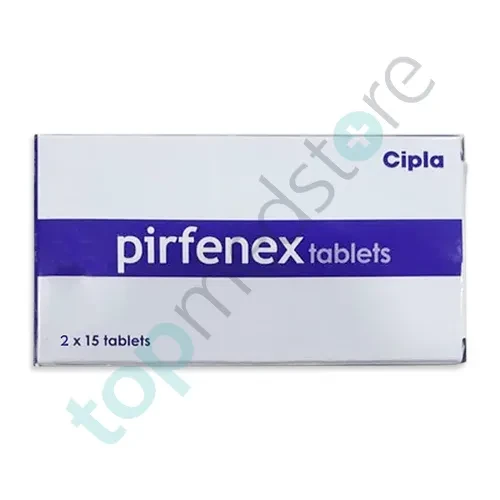
| Product name | Pirfenidone 200mg |
|---|---|
| Active Ingredient | Pirfenidone |
| Dosage | 200mg |
| Drug Type | Tablets |
| Indication | Idiopathic Pulmonary Fibrosis |
| Manufacturer | Cipla Limited |
Total $105.60
Gradual breathing difficulty that worsens over months or years can signal a serious lung condition that needs long-term medical care. Pirfenidone 200mg tablet helps slow down this progression and supports better lung function. It belongs to a class of medicines called antifibrotic agents, which work by reducing scarring in lung tissue. Doctors mainly prescribe it for idiopathic pulmonary fibrosis (IPF), a chronic and progressive lung disease. A pulmonologist usually manages this condition and decides the treatment plan based on severity.
Idiopathic pulmonary fibrosis causes the lungs to become thick, stiff, and less flexible over time. This condition happens due to fibrosis, which means excessive scar tissue formation in the lungs. As this scarring increases, oxygen transfer into the blood becomes difficult. Patients often notice shortness of breath during daily activities, persistent dry cough, fatigue, and reduced stamina even with minimal effort.
Unlike infections, IPF does not go away on its own. It slowly progresses if left untreated. Pirfenidone 200mg tablet does not cure the disease, but it plays an important role in slowing lung damage. With regular use, it helps preserve lung capacity and improves the ability to carry out routine tasks.
Doctors prescribe Pirfenidone 200mg tablet primarily for managing idiopathic pulmonary fibrosis (IPF), a condition that leads to progressive lung scarring.
This medicine helps slow the rate of fibrosis progression, which means it reduces how quickly lung tissue becomes stiff and damaged. Slower progression allows patients to maintain better breathing capacity for a longer time.
Improvement in exercise tolerance is another important benefit. Many patients find it easier to perform daily activities such as walking or climbing stairs after consistent treatment.
Doctors also use this medicine as part of a long-term strategy to manage chronic lung disease. It helps reduce symptom worsening, especially breathlessness and fatigue, which are common in IPF patients.
Over time, continued therapy supports better quality of life and helps delay severe respiratory decline.
Pirfenidone acts by inhibiting transforming growth factor-beta (TGF-β), a key substance responsible for tissue scarring. It also reduces the activity of fibroblasts, the cells that produce excess collagen in the lungs.
When fibrosis slows down, lung tissue becomes less stiff and more functional. This allows the lungs to expand more easily during breathing.
Improved lung flexibility supports better oxygen exchange. As a result, patients may feel less breathless and more active in daily life over time.
Patients may experience side effects while using Pirfenidone 200mg tablet, especially during the early phase of treatment or dose adjustment.
Common effects include nausea, loss of appetite, fatigue, and dizziness. These symptoms are usually mild and often improve as the body adjusts to the medicine.
Some patients develop photosensitivity reactions, where the skin becomes more sensitive to sunlight. This may lead to redness or skin irritation after sun exposure.
Digestive issues such as diarrhea, stomach discomfort, or indigestion may also occur. Taking the medicine with food often helps reduce these effects.
Less commonly, patients may experience changes in liver function tests. In rare cases, severe skin reactions or allergic responses can occur. Warning signs include yellowing of skin, dark urine, or persistent rash.
Regular monitoring helps detect side effects early and ensures safe long-term use.
Doctors advise taking Pirfenidone 200mg tablet exactly as prescribed. Taking it with food helps reduce stomach-related side effects and improves tolerance.
Sun protection is very important during treatment. Patients should avoid direct sunlight and use sunscreen or protective clothing when outdoors.
Before starting treatment, patients should inform their doctor about any existing liver disease. Routine liver function tests are usually recommended throughout therapy.
Smoking can reduce the effectiveness of this medicine, so avoiding tobacco is strongly advised. A healthy lifestyle supports better treatment outcomes.
Drug interactions may occur with certain antibiotics or other medicines. Sharing a complete medication list with the doctor helps prevent complications.
A pulmonologist carefully monitors disease progression and adjusts dosage based on response and tolerance.
Always purchase Pirfenidone 200mg tablet from trusted pharmacy sources to ensure safety, quality, and effectiveness.
This content is for informational purposes only. Use Pirfenidone 200mg tablet only under the supervision of a qualified pulmonologist or healthcare professional. Do not self-medicate or change your dosage without medical advice.
$486.00 – $1591.20
$364.80 – $1194.00
$364.80 – $1591.20
$105.60 – $345.60