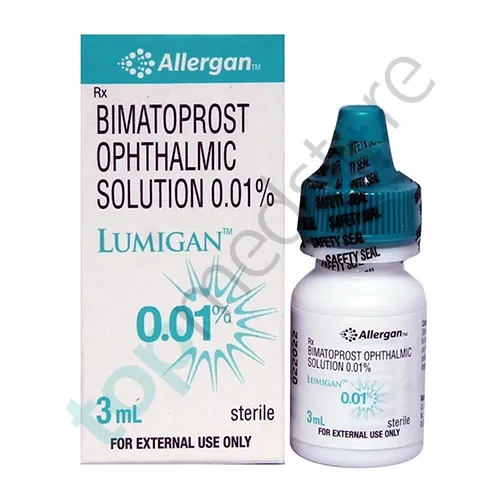
Bimatoprost 0.01% Ophth Solution 3ml
$185.58 – $607.44
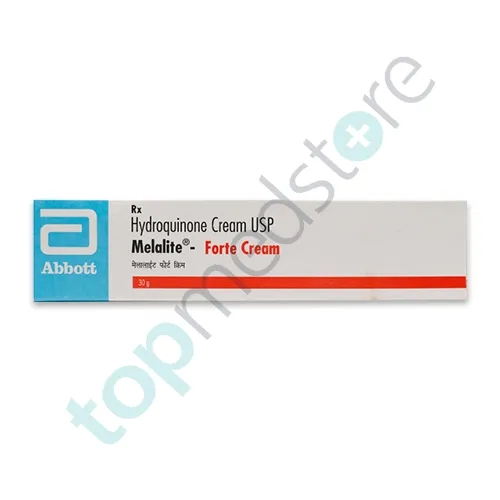
| Product name | Hydroquinone Cream 4%-30g |
|---|---|
| Active Ingredient | Hydroquinone |
| Dosage | 4% 30g |
| Drug Type | Tubes |
| Indication | Hyperpigmentation |
| Manufacturer | Abbott |
Total $75.90
Hydroquinone Cream 4%–30g is a prescription skin medicine used to reduce dark patches on the skin. It is mainly used for treating uneven skin tone, dark spots, and pigmentation problems.
This cream contains hydroquinone, a skin-lightening agent (medicine that reduces excess melanin, the pigment responsible for skin color). A dermatologist (skin specialist) prescribes it when the skin produces too much pigment in certain areas.
Melanin is a natural substance in the skin that gives color. Sometimes, due to sun exposure, hormonal changes, acne marks, or skin injury, melanin production increases in specific areas. This leads to dark patches and uneven skin tone.
Hydroquinone Cream 4% helps reduce excess melanin production and gradually lightens dark areas of the skin, making the skin tone more even over time.
Hydroquinone Cream 4%–30g uses mainly focus on treating skin pigmentation and dark spots. Dermatologists prescribe it for conditions like melasma, where brown or gray patches appear on the face due to hormonal changes or sun exposure.
It is also used for hyperpigmentation, a condition where certain areas of the skin become darker than the surrounding skin. This can happen after acne, skin injury, or inflammation. These marks are often called post-inflammatory hyperpigmentation.
The cream is also used to reduce freckles and age spots that appear due to long-term sun exposure. In some cases, it is used to improve uneven skin tone and restore a more balanced appearance.
With regular use under medical supervision, Hydroquinone Cream 4% helps lighten dark patches, improve skin clarity, and support a more even complexion.
Hydroquinone Cream 4%–30g works by reducing the production of melanin in the skin. Melanin is made by special skin cells called melanocytes. These cells become overactive in areas where dark patches form.
Hydroquinone blocks the enzyme called tyrosinase (an enzyme responsible for melanin production). When this enzyme is blocked, the skin produces less pigment in the treated area.
As melanin production decreases, dark patches slowly start to fade. The skin gradually becomes lighter and more even in tone. This process takes time and requires regular application as advised by a dermatologist.
In simple terms, the cream does not bleach the skin instantly. Instead, it corrects uneven pigmentation by controlling excess melanin production and allowing the skin tone to normalize over time.
Hydroquinone Cream 4%–30g side effects are usually mild, but they may occur in some people, especially during early use.
Common side effects include mild skin irritation, redness, dryness, or a slight burning sensation at the application site. These effects are often temporary and reduce as the skin adjusts to the treatment.
Some people may notice increased sensitivity to sunlight, which can make the skin more prone to darkening if proper sun protection is not used. In rare cases, excessive or long-term use may lead to skin discoloration or uneven lightening.
If severe irritation, swelling, or allergic reaction occurs, the use of the cream should be stopped and a dermatologist should be consulted immediately.
Hydroquinone Cream 4%–30g should always be used under the supervision of a dermatologist (skin specialist). It should be applied only on affected areas in a thin layer, as directed by the doctor.
Avoid applying the cream on broken skin, open wounds, or near the eyes, mouth, and nostrils. Sun exposure should be minimized during treatment, as UV rays can worsen pigmentation and reduce the effectiveness of the cream.
Using sunscreen during the day is important to protect the skin and maintain results. The cream should not be used for longer than prescribed, as long-term unsupervised use may cause unwanted skin changes.
If you are using other skin treatments or acne medicines, inform your dermatologist to avoid irritation or interaction.
This content is for educational purposes only. It does not replace medical advice, diagnosis, or treatment from a qualified dermatologist (skin specialist). Always consult a healthcare professional before using Hydroquinone Cream 4%–30g or any skin medicine. Do not start, stop, or change any treatment without proper medical supervision.
$185.58 – $607.44
$99.00 – $324.00
$98.34 – $321.84
$67.98 – $222.48