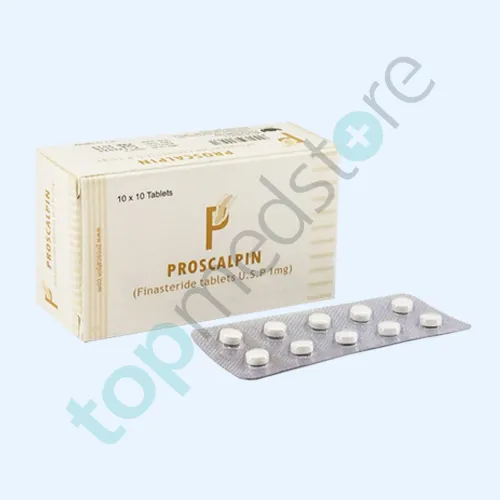
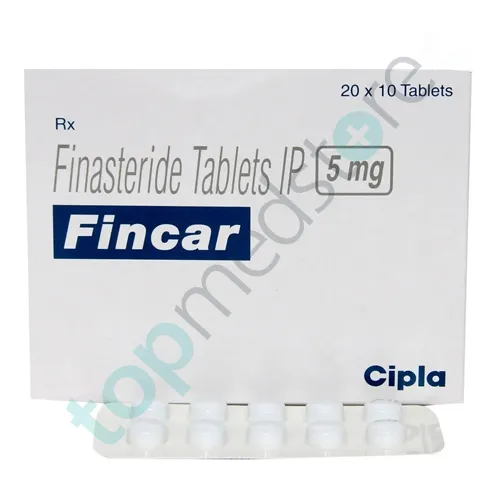
Finasteride 1mg
$36.30 – $118.80
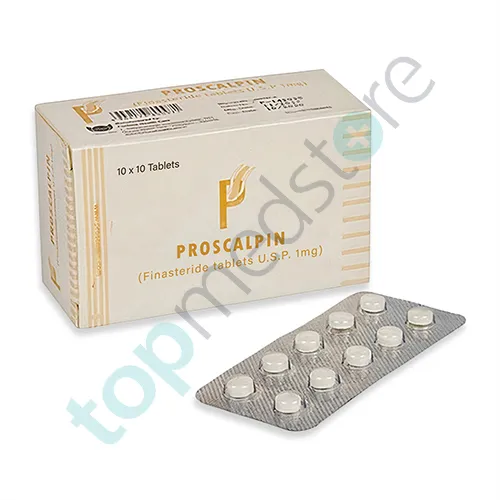
Finasteride is a prescription medicine used to treat hair loss and enlarged prostate gland in men. Doctors commonly prescribe Finasteride tablets for male pattern baldness and benign prostatic hyperplasia.
Male pattern baldness is a common type of hair loss in men that usually causes thinning hair and a receding hairline.
Benign prostatic hyperplasia (BPH) means enlargement of the prostate gland. The prostate is a small gland located below the bladder in men. When the prostate becomes enlarged, it may cause difficulty passing urine.
A dermatologist is the specialist doctor who commonly treats hair loss conditions and may prescribe Finasteride for hair regrowth. A urologist is a doctor who treats urinary and prostate-related problems.
Finasteride belongs to a group of medicines called 5-alpha reductase inhibitors. These medicines lower the production of a hormone linked to hair loss and prostate enlargement.
The medicine is available in strengths such as Finasteride 1 mg and Finasteride 5 mg tablets.
Finasteride is widely used for long-term treatment. Regular use may help improve hair growth and reduce urinary symptoms caused by enlarged prostate.
Finasteride works by lowering the amount of a hormone called dihydrotestosterone (DHT) inside the body.
DHT is a male hormone that plays a major role in male pattern hair loss and prostate enlargement.
In hair loss, high DHT levels may shrink hair follicles over time.
Hair follicles are tiny structures in the skin where hair grows.
As hair follicles shrink, hair becomes thinner and weaker.
Finasteride lowers DHT levels and helps protect hair follicles from further shrinking.
Some men may notice reduced hair fall and improved hair growth after several months of regular treatment.
In enlarged prostate conditions, lowering DHT may help reduce prostate size and improve urine flow.
Patients with prostate enlargement may notice less difficulty during urination and reduced frequent urination.
Doctors usually recommend regular follow-up visits during treatment.
Doctors prescribe Finasteride mainly for male pattern hair loss and benign prostatic hyperplasia (BPH).
The medicine is commonly used to slow hair loss in men and support hair regrowth.
Some patients notice thicker hair and reduced hair thinning after regular use.
Hair regrowth usually happens slowly and may take several months to become visible.
Doctors also prescribe Finasteride for enlarged prostate gland symptoms.
Patients with enlarged prostate may experience weak urine flow, difficulty starting urination, or frequent urination, especially at night.
Finasteride may help improve urinary symptoms and lower the risk of urinary blockage.
The medicine is generally used as part of long-term treatment because stopping treatment may allow symptoms or hair loss to return.
Finasteride works by blocking an enzyme called 5-alpha reductase.
An enzyme is a substance that helps chemical reactions happen inside the body.
This enzyme converts testosterone into DHT.
By blocking this process, Finasteride lowers DHT levels in the scalp and prostate gland.
Lower DHT levels may help reduce hair follicle damage and improve hair growth.
In the prostate gland, lower DHT levels may help shrink enlarged tissue and improve urination.
Doctors usually advise patients to take the medicine regularly at the same time each day.
Patients should continue treatment as prescribed because results may take several months.
The medicine works gradually, and stopping treatment suddenly may reduce long-term benefits.
Like all medicines, Finasteride may cause side effects in some patients. Many side effects are mild and improve during treatment.
Common side effects include reduced sexual desire, erection problems, and decreased semen volume.
Semen is the fluid released during ejaculation.
Some patients may also experience breast tenderness, dizziness, or mild skin rash.
Rare but serious side effects require immediate medical attention. Patients should contact a doctor if they develop breast lumps, nipple discharge, severe allergic reactions, depression, or swelling of the lips and face.
Finasteride may affect certain blood test results related to the prostate gland. Doctors may recommend regular prostate examinations during long-term treatment.
Women who are pregnant or may become pregnant should avoid handling crushed or broken Finasteride tablets because the medicine may affect the development of a male baby during pregnancy.
This content is for educational purposes only. It does not replace professional medical advice, diagnosis, or treatment. Always consult a dermatologist, urologist, or another licensed healthcare professional before using Finasteride or changing treatment. Use this medicine only under proper medical supervision.
| Product name | Finasteride |
|---|---|
| Category | Enlarged Prostate Treatments |
| Shipping offer | Free shipping on orders of $110.00 or more |
$36.30 – $118.80
$60.50 – $198.00
$60.00 – $195.60
$70.79 – $231.68