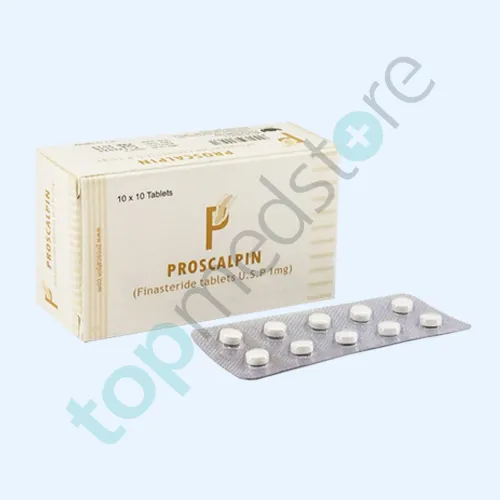
Proscalpin 1mg
$60.50 – $198.00
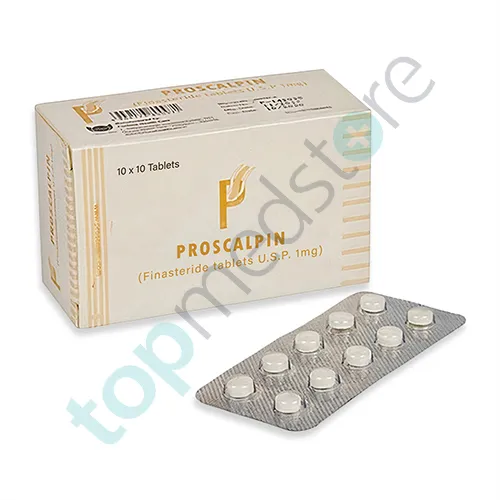
| Product name | Finasteride 1mg |
|---|---|
| Active Ingredient | Finasteride |
| Dosage | 1mg |
| Drug Type | Tablets |
| Indication | Male Pattern Hair Loss |
| Manufacturer | Fortune Healthcare |
Total $36.30
Finasteride 1mg is a prescription medicine used mainly for the treatment of male pattern hair loss, also known as androgenetic alopecia. It contains Finasteride, which belongs to a class of medicines called 5-alpha reductase inhibitors.
This medicine is commonly prescribed by a dermatologist or hair specialist for men who are experiencing gradual hair thinning, especially at the crown and front of the scalp.
Finasteride 1mg is not a cosmetic product. It works at the hormonal level inside the body to slow down hair loss and support hair regrowth in some cases.
Finasteride 1mg works by controlling a hormone responsible for hair loss in men.
In the body, testosterone is naturally converted into a stronger hormone called DHT (dihydrotestosterone). DHT is the main cause of male pattern hair loss because it weakens hair follicles over time.
Finasteride blocks the enzyme called 5-alpha reductase, which is responsible for converting testosterone into DHT. When DHT levels decrease, hair follicles are less damaged and become more stable.
This helps slow down hair thinning, hair shedding, and gradual baldness progression. In many cases, it may also support partial hair regrowth, especially when treatment is started early.
The effect is gradual and usually becomes noticeable after several months of regular use.
Finasteride 1mg is mainly used for the treatment of male pattern baldness (androgenetic alopecia).
It is prescribed for men who are experiencing receding hairline, thinning hair on the crown, or overall hair density reduction.
Doctors use this medicine to help slow down hair loss progression and maintain existing hair for a longer time.
It is most effective in early to moderate stages of hair loss, where hair follicles are still active but weakened.
Finasteride is part of a long-term hair management plan, which may also include topical treatments, proper nutrition, and scalp care routines.
It is important to understand that this medicine is only for male use in hair loss treatment and is not used for general hair strengthening in women without medical guidance.
Finasteride works by reducing levels of DHT (dihydrotestosterone) in the scalp and bloodstream.
DHT attaches to hair follicles and gradually shrinks them. This process is called follicle miniaturization, which leads to thinner and weaker hair strands over time.
By blocking the enzyme 5-alpha reductase, Finasteride reduces the conversion of testosterone into DHT. This lowers DHT levels in the scalp.
When DHT levels decrease, hair follicles become less damaged. This helps slow down hair loss and allows existing hair to grow stronger and thicker in some cases.
Because hair growth follows a slow natural cycle, visible improvement usually takes several months of consistent use.
Like all prescription medicines, Finasteride 1mg may cause side effects in some users, although many tolerate it well.
Common side effects may include reduced libido (lower sexual desire), mild erectile difficulty, or reduced semen volume. These effects are usually uncommon and may improve over time.
Some users may also experience mild breast tenderness or mood changes in rare cases.
A small number of people may notice temporary hair shedding in the early phase of treatment. This is often part of the natural hair cycle adjustment.
Rare but serious side effects should be discussed with a doctor if they persist or worsen.
Finasteride should be used only under medical supervision because it affects hormone levels in the body.
This content is for educational purposes only and is not a substitute for professional medical advice. Finasteride 1mg should only be taken under the supervision of a qualified healthcare professional such as a dermatologist or physician. Do not start, stop, or change the dose without medical guidance. Regular follow-up is important for safe and effective hair loss treatment.
$60.50 – $198.00
$60.00 – $195.60
$70.79 – $231.68
$61.83 – $202.32