Dapsone 100mg
$140.00 – $440.00
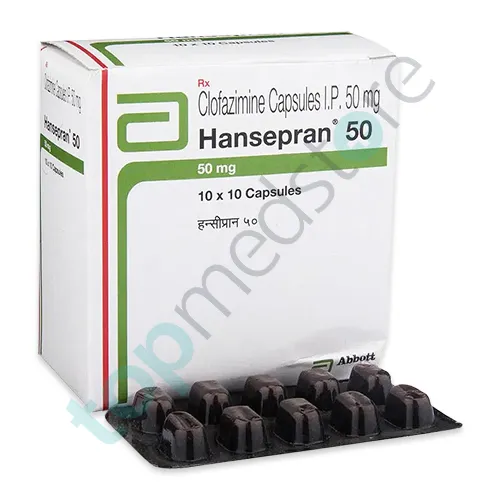
| Product name | Clofazimine 50mg |
|---|---|
| Active Ingredient | Clofazimine |
| Dosage | 50mg |
| Drug Type | Capsules |
| Indication | Leprosy |
| Manufacturer | Abbott |
Total $13.00
Clofazimine 50mg is a prescription medicine used to treat leprosy, also called Hansen’s disease. It contains the active ingredient Clofazimine. This medicine helps fight the bacteria that cause the infection.
Leprosy is a long-term bacterial disease. It mainly affects the skin and nerves. In some people, it can also affect the eyes and nose. If the infection is not treated, it may cause nerve damage, numbness, muscle weakness, and skin problems.
Doctors usually prescribe Clofazimine 50mg capsules together with other medicines. This is called multidrug therapy (MDT). Using several medicines together helps control the infection better and lowers the risk of the bacteria becoming resistant to treatment.
Dermatologists and infectious disease specialists often use Clofazimine to treat severe forms of leprosy. Some doctors may also use it for certain rare bacterial infections and skin inflammation problems.
This medicine works slowly inside the body. Because of this, treatment may continue for many months. Patients should continue treatment exactly as prescribed even if symptoms improve early.
Clofazimine 50mg helps stop the growth of harmful bacteria inside the body. It slowly builds up in body tissues and continues working over time.
The active ingredient Clofazimine enters bacterial cells and damages their normal function. This helps reduce the number of bacteria causing the infection.
The medicine also helps reduce inflammation. Inflammation means swelling, redness, pain, or irritation in the body. Some people with leprosy develop painful skin reactions and nerve swelling. Clofazimine capsules may help calm these reactions.
By lowering inflammation, the medicine may help protect nerves from damage. Healthy nerves are important because nerves control feeling and movement in the body.
Some patients notice less skin irritation, less pain, and improvement in skin patches during treatment. However, improvement may happen slowly because the medicine works gradually.
Doctors may check skin condition, digestive health, and overall treatment progress during therapy.
The main use of Clofazimine 50mg is the treatment of leprosy. Doctors use it as part of combination treatment with other antibiotics.
This medicine is commonly used for multibacillary leprosy. This is a severe form of leprosy where a large number of bacteria are present in the body.
Doctors may also prescribe Clofazimine capsules to control painful inflammatory reactions linked to leprosy. These reactions may cause swelling, redness, fever, and nerve pain.
In some cases, specialists may use Clofazimine for difficult bacterial infections related to the tuberculosis family. These infections are rare and usually need specialist care.
Patients with nerve pain or skin inflammation may benefit from the medicine’s anti-inflammatory effects. Lower inflammation may help reduce tissue damage and improve comfort.
Doctors usually recommend regular medical visits during treatment. Following the full treatment plan is very important for proper recovery.
Clofazimine 50mg works by slowing the growth of bacteria that cause leprosy.
The active ingredient Clofazimine damages bacterial cells and prevents them from growing normally. This helps the immune system control the infection more effectively.
The medicine also reduces harmful inflammation inside the body. This may help lower skin swelling, redness, and nerve irritation caused by leprosy reactions.
Because the medicine stays inside body tissues for a long time, it continues working slowly even between doses.
Doctors usually prescribe Clofazimine 50mg capsules with medicines like Rifampicin and Dapsone for better infection control.
Patients should take the medicine exactly as prescribed. Skipping doses or stopping treatment early may allow the infection to return.
Like many antibiotic medicines, Clofazimine 50mg may cause side effects in some people.
One common side effect is skin color change. The skin may become dark brown, red-brown, or blackish during treatment. Some people may also notice darker sweat or tears. These changes usually improve slowly after treatment ends.
Some patients may develop dry skin, itching, or mild skin irritation.
Digestive side effects may include stomach pain, nausea, vomiting, diarrhea, or loss of appetite.
Rarely, some patients may develop serious stomach or intestinal problems during long-term treatment.
A few people may feel emotionally upset because of visible skin color changes. Doctors often explain this possibility before treatment starts.
Patients should contact a doctor if they develop severe stomach pain, breathing problems, swelling, or signs of an allergic reaction.
This content is for educational purposes only. It does not replace medical advice, diagnosis, or treatment. Always consult a physician, dermatologist, infectious disease specialist, or qualified healthcare professional before starting or stopping Clofazimine 50mg. Use this medicine only under medical supervision.
$140.00 – $440.00
$17.00 – $56.00
$115.83 – $379.08
$115.83 – $440.00