
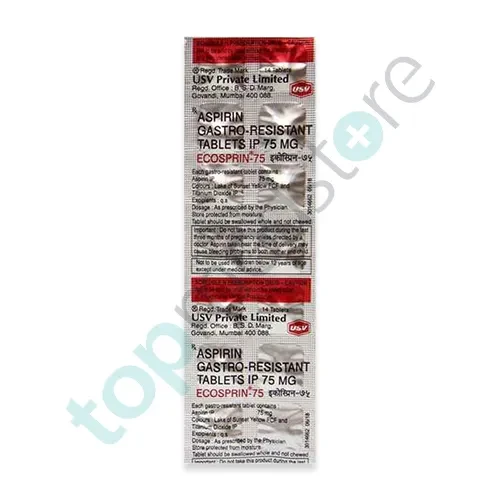
Acetylsalicylic Acid 75mg
$18.62 – $58.80
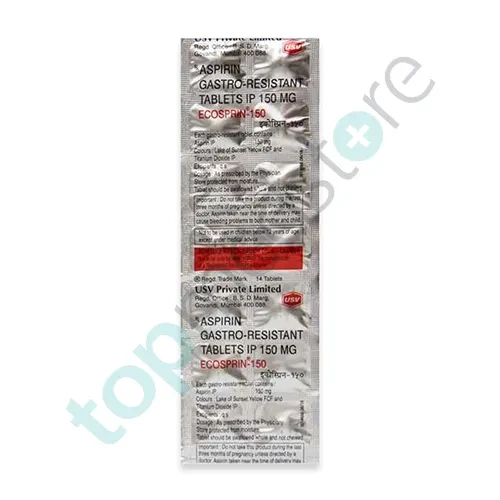
| Product name | Acetylsalicylic Acid 150mg |
|---|---|
| Active Ingredient | Acetylsalicylic acid |
| Dosage | 150mg |
| Drug Type | Tablets |
| Indication | Cardiovascular Prevention |
| Manufacturer | USV Ltd |
Acetylsalicylic acid 150mg Tablets
In stock
Total $19.60
Acetylsalicylic Acid 150mg is a low-dose antiplatelet medicine commonly used to help reduce the risk of blood clots forming inside blood vessels. It is often prescribed by a cardiologist or physician for long-term protection of the heart and blood circulation.
This medicine belongs to a group called salicylates, and in low doses it is mainly used for its blood-thinning (antiplatelet) effect, not for pain relief.
In simple words, Acetylsalicylic Acid 150mg helps prevent blood from forming harmful clots that can block arteries.
Blood contains small cells called platelets. These platelets help stop bleeding by forming clots when there is an injury.
Sometimes, platelets can become overactive and form clots inside blood vessels even when there is no injury. These unwanted clots can block blood flow and lead to serious conditions.
Acetylsalicylic Acid works by reducing the activity of platelets. It makes them less sticky, so they do not clump together easily.
In simple terms, this medicine keeps blood flowing smoothly by preventing unnecessary clot formation.
Doctors prescribe Acetylsalicylic Acid 150mg mainly for cardiovascular protection.
It is commonly used to reduce the risk of heart attack, which happens when blood flow to the heart is blocked due to a clot.
It is also used to prevent stroke, which occurs when a clot blocks blood flow to the brain.
In some patients, it is prescribed after heart procedures such as angioplasty or stent placement, to prevent clot formation inside the stent.
It may also be used in people with high risk of heart disease, such as those with diabetes, high blood pressure, or high cholesterol.
Acetylsalicylic Acid (Aspirin in low dose form) works by blocking an enzyme called COX-1 (cyclooxygenase-1) in platelets.
This enzyme is responsible for producing substances that make platelets sticky.
When COX-1 is blocked, platelets become less active and less likely to form clots.
In simple words, this medicine reduces the ability of platelets to stick together, lowering the risk of dangerous blood clots.
Because platelets do not regenerate quickly, the effect of this medicine lasts for several days.
Some patients may experience side effects, especially with long-term use.
A common effect is stomach irritation, which may feel like burning, discomfort, or acidity.
Some people may experience nausea, which means a feeling of sickness in the stomach.
Increased risk of bleeding is an important effect, which means cuts may bleed slightly longer than usual.
In some cases, easy bruising may occur, where small marks appear on the skin after minor impact.
Rarely, allergic reactions such as skin rash or breathing difficulty may occur in sensitive individuals.
Very rarely, long-term use may lead to stomach ulcers or gastrointestinal bleeding, which requires medical attention.
Most side effects can be managed with proper medical supervision.
Acetylsalicylic Acid 150mg should be used only under the supervision of a cardiologist or physician.
Take the medicine exactly as prescribed and do not stop it suddenly without medical advice, as this may increase clot risk.
Inform your doctor if you have a history of stomach ulcers, bleeding disorders, asthma, or kidney problems.
Avoid taking other painkillers or blood-thinning medicines without consulting your doctor.
Take it with food to reduce the chance of stomach irritation.
Report any unusual bleeding, black stools, or severe stomach pain immediately to your doctor.
If prescribed, use Acetylsalicylic Acid 150mg only from trusted pharmacy sources.
Acetylsalicylic Acid 150mg is a prescription antiplatelet medicine. It should only be used under the supervision of a cardiologist or qualified healthcare professional. This content is for informational purposes only and does not replace medical advice, diagnosis, or treatment. Always consult your doctor before starting or changing any medicine.
$18.62 – $58.80
$18.62 – $66.64