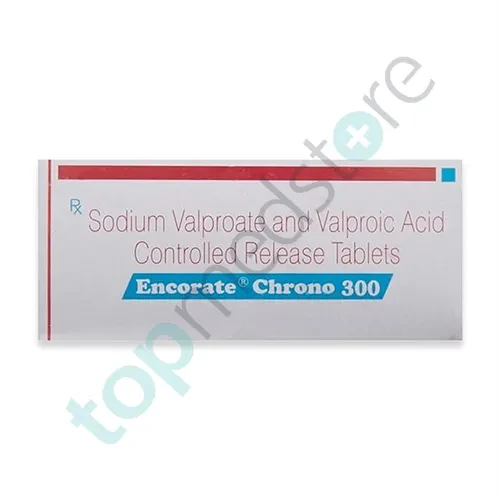
Sodium Valproate-Valproic Acid 300mg
$58.00 – $188.00

| Product name | Sodium Valproate-Valproic Acid 500mg |
|---|---|
| Active Ingredient | Sodium Valproate-Valproic Acid |
| Dosage | 500mg |
| Drug Type | Tablets |
| Indication | Epilepsy |
| Manufacturer | Sanofi India Ltd |
Sodium Valproate-Valproic Acid 500mg Tablets
In stock
Total $66.00
Sodium Valproate–Valproic Acid 500mg is a prescription anticonvulsant (anti-seizure) medicine used to control epilepsy and stabilize brain activity. It is commonly prescribed by a neurologist for conditions where there is abnormal electrical activity in the brain, leading to seizures or mood disturbances.
This combination contains two forms of the same active medicine, which helps provide better absorption and a more stable level of the drug in the body.
It is often used as a maintenance dose for long-term control of symptoms.
In simple words, this medicine helps calm the brain and prevents sudden bursts of activity that cause seizures or mood instability.
The brain sends signals through electrical and chemical communication between nerve cells. In conditions like epilepsy, these signals become overactive and uncontrolled, leading to seizures.
A seizure (fit) is a sudden disturbance in brain activity that may cause shaking, confusion, or loss of awareness.
Sodium Valproate–Valproic Acid works by increasing the level of a calming chemical in the brain called GABA (gamma-aminobutyric acid). GABA helps reduce excessive nerve activity.
By increasing GABA levels, the medicine slows down abnormal electrical signals and stabilizes brain function.
This helps prevent seizures and improves overall control of nerve activity.
In simple terms, this medicine increases calming signals in the brain so it does not become overactive.
Sodium Valproate–Valproic Acid 500mg is mainly used for epilepsy, helping control different types of seizures.
It is also used for bipolar disorder, where it helps stabilize mood and prevent extreme mood swings.
Doctors may prescribe it for migraine prevention, reducing the frequency and severity of headaches.
In some cases, it is used for other neurological conditions where controlling brain activity is important.
In real-life treatment, neurologists use this medicine when long-term stability of brain signals is needed to prevent symptoms.
Sodium Valproate–Valproic Acid works by affecting chemical signals in the brain.
It increases the level of GABA, a neurotransmitter (chemical messenger) that reduces nerve activity.
At the same time, it also affects sodium channels and other pathways involved in electrical signaling.
This combined action helps reduce abnormal brain activity and prevents seizures.
It also helps stabilize mood by balancing chemical signals in the brain.
In simple words, this medicine calms overactive nerve signals and keeps brain activity balanced.
Some people may experience side effects, especially at the beginning of treatment.
Common effects include nausea, vomiting, or stomach discomfort.
You may feel drowsiness or dizziness, particularly when starting the medicine.
There may be weight gain or increased appetite over time.
Some people notice tremors (slight shaking of hands).
In some cases, there may be hair thinning or hair loss, which is usually reversible.
Rare but serious side effects include liver problems, pancreatitis (inflammation of the pancreas), or blood-related issues.
Most side effects can be managed with proper medical supervision.
Sodium Valproate–Valproic Acid 500mg should be taken under the supervision of a neurologist.
Do not stop the medicine suddenly, as it may trigger seizures.
Regular blood tests may be required to monitor liver function and drug levels.
Inform your doctor if you have liver disease, metabolic disorders, or a history of pancreatitis.
This medicine is not recommended during pregnancy unless clearly advised, as it may affect fetal development.
Avoid alcohol, as it may increase drowsiness and side effects.
Take the medicine at the same time each day to maintain stable levels in the body.
Regular follow-up ensures safe and effective treatment.
This content is for informational purposes only and does not replace medical advice, diagnosis, or treatment. Always consult your neurologist before starting or changing any medicine.
$58.00 – $188.00
$50.00 – $164.00
$55.80 – $183.60
$36.90 – $122.40