Rifaximin 200mg
$207.00 – $680.00
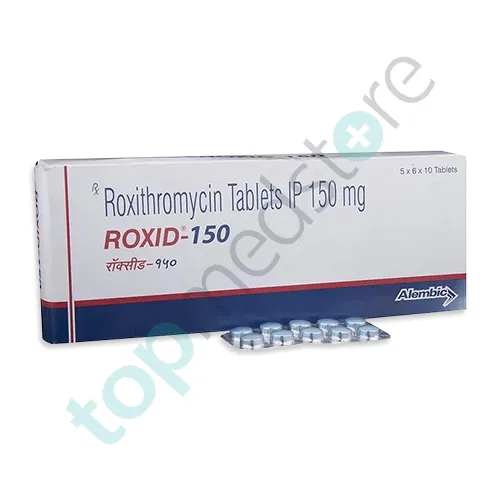
| Product name | Roxithromycin 150 mg |
|---|---|
| Active Ingredient | Roxithromycin |
| Dosage | 150mg |
| Drug Type | Tablets |
| Indication | Bacterial Infections |
| Manufacturer | Alembic |
Total $116.00
Roxithromycin 150 mg is an antibiotic medicine used to treat different types of bacterial infections. It belongs to the macrolide class of antibiotics, which means it stops bacteria from making proteins they need to grow and survive. A general physician or infectious disease specialist usually prescribes this medicine after confirming a bacterial infection.
A bacterial infection means harmful bacteria have entered the body and are multiplying. These bacteria can affect the throat, lungs, skin, and soft tissues. Common symptoms include fever, sore throat, cough, swelling, or pain in the affected area.
Macrolide antibiotics are commonly used when patients are allergic to penicillin or when other antibiotics are not suitable.
Roxithromycin 150 mg tablet helps control bacterial growth and supports recovery from infection.
Doctors prescribe Roxithromycin 150 mg for mild to moderate bacterial infections.
It is used for respiratory tract infections, which means infections in the throat, bronchi, or lungs. These can cause cough, sore throat, fever, and breathing discomfort.
It is also used for tonsillitis and pharyngitis, which means infection and swelling in the tonsils or throat. This can cause pain while swallowing and throat irritation.
Doctors may prescribe it for skin and soft tissue infections, which means infections in the skin layers that cause redness, swelling, and pain.
In some cases, it is used for sinusitis, which means infection in the sinus cavities that can cause facial pain, headache, and nasal blockage.
It may also be used when patients cannot tolerate other common antibiotics.
Roxithromycin works by blocking bacterial protein production.
Bacteria need proteins to grow, multiply, and spread infection.
In simple words, this medicine stops bacteria from making the building blocks they need to survive.
When protein production stops, bacteria slowly stop growing and die. This helps the body’s immune system clear the infection.
Patients may experience side effects while using Roxithromycin 150 mg. Most effects are mild and temporary.
Common side effects include nausea, vomiting, and stomach pain, which mean digestive discomfort.
Some patients may experience diarrhea, which means loose stools during treatment.
Moderate side effects include headache or dizziness, which means a light spinning feeling or mild discomfort.
Some people may notice a change in taste, which means food may taste different or metallic.
Rare side effects include skin rash or itching, which may indicate sensitivity to the medicine.
Very rarely, allergic reactions such as swelling, severe rash, or breathing difficulty may occur and need urgent medical attention.
Doctors advise taking Roxithromycin 150 mg tablet exactly as prescribed. A general physician decides the dose based on infection type and severity.
Take the medicine at the same time each day for better results.
Do not skip doses or stop early, even if symptoms improve. This may allow bacteria to return.
Inform your doctor if you have liver disease, as dose adjustment may be needed.
Avoid self-medication, as incorrect antibiotic use can reduce effectiveness and increase resistance.
Follow medical advice carefully. A general physician may adjust treatment based on recovery and test results. If prescribed, you can buy Roxithromycin 150 mg from trusted pharmacy sources.
Roxithromycin 150 mg is a prescription medicine. A qualified general physician or specialist should supervise its use. This content is for informational purposes only. It does not replace medical advice, diagnosis, or treatment. Always consult your doctor before starting or changing this medicine.
$207.00 – $680.00
$83.10 – $211.20
$142.00 – $464.00
$58.50 – $147.60