Omeprazole-Sodium Bicarbonate 20mg-5.9g
$37.40 – $122.40
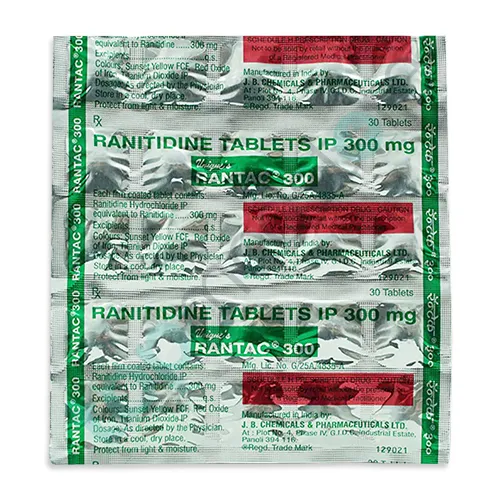
| Product name | Ranitidine 300mg |
|---|---|
| Active Ingredient | Ranitidine |
| Dosage | 300mg |
| Drug Type | Tablets |
| Indication | Gastroesophageal Reflux Disease |
| Manufacturer | J.B. Chemicals |
Total $74.70
A strong burning feeling in the chest, frequent acidity, and sour burps after meals often indicate excess stomach acid. Ranitidine 300mg tablet helps reduce this acid and gives relief from acid-related digestive discomfort. It belongs to the H2 receptor antagonist (H2 blocker) class of medicines that reduce gastric acid production.
Doctors use this medicine for conditions like gastroesophageal reflux disease (GERD), gastritis, and peptic ulcer disease. These conditions happen when the stomach produces too much acid, which irritates the stomach lining or flows back into the food pipe. A gastroenterologist may prescribe this higher strength when symptoms are more severe or long-lasting.
Patients with high acidity often experience heartburn, upper abdominal burning, acid regurgitation, and bloating. These symptoms can worsen after spicy food, late meals, or alcohol intake.
Ranitidine 300mg tablet works by lowering acid production in the stomach and helps reduce irritation and pain.
Doctors prescribe Ranitidine 300mg tablet for stronger or persistent acid-related stomach problems.
It is mainly used in GERD (acid reflux disease), where stomach acid flows back into the esophagus and causes burning chest pain and discomfort.
It is also used in gastritis, where the stomach lining becomes inflamed due to excess acid, infection, or irritation from medicines like NSAIDs.
Doctors prescribe it for peptic ulcer disease, where sores develop in the stomach or upper intestine due to acid damage. Acid reduction helps ulcers heal and reduces pain.
It may also be used for severe acid indigestion and frequent heartburn, especially when lower doses do not provide enough relief.
In some cases, it is used as maintenance therapy for patients with chronic acid-related disorders.
Ranitidine blocks histamine H2 receptors in the stomach lining. These receptors normally stimulate acid production.
In simple terms, Ranitidine 300mg tablet reduces the amount of acid the stomach produces.
With less acid, burning sensations reduce and irritation in the food pipe decreases. This also helps the stomach lining heal and prevents further damage.
It provides longer acid control compared to lower doses, especially in more severe cases.
Most patients tolerate Ranitidine 300mg tablet well, but some mild side effects may occur.
Common effects include headache, dizziness, nausea, constipation, or diarrhea. These are usually temporary.
Some patients may experience mild stomach discomfort or fatigue during initial use.
Rare side effects include skin rash, confusion (mainly in elderly patients), or changes in liver function tests.
Serious side effects are uncommon but should be reported if symptoms persist or worsen.
Doctors advise taking Ranitidine 300mg tablet exactly as prescribed, usually once daily or as directed.
Patients with kidney or liver disease should inform their doctor before using this medicine, as dose adjustment may be required.
Avoid alcohol, smoking, spicy food, and caffeine, as these can increase acid production and reduce treatment effectiveness.
A gastroenterologist may monitor your symptoms and adjust treatment based on response.
Do not self-medicate for long periods without medical supervision.
Always purchase Ranitidine 300mg tablet from trusted pharmacy sources to ensure safety and quality.
This content is for informational purposes only. Ranitidine 300mg tablet should be used only under the supervision of a qualified gastroenterologist or healthcare professional. Do not start, stop, or change the dose without medical advice.
$37.40 – $122.40
$32.70 – $106.80
$29.70 – $97.20
$30.60 – $99.60