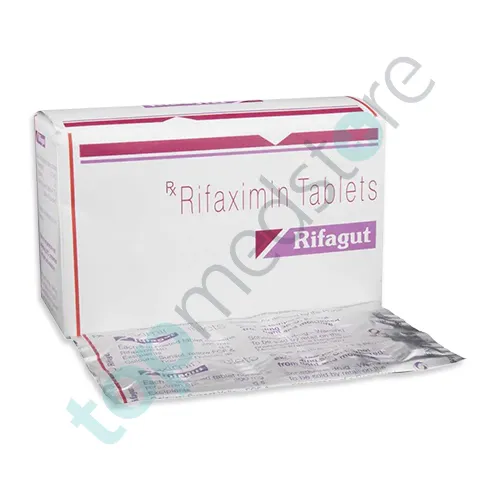
Rifaximin 200mg
$207.00 – $680.00
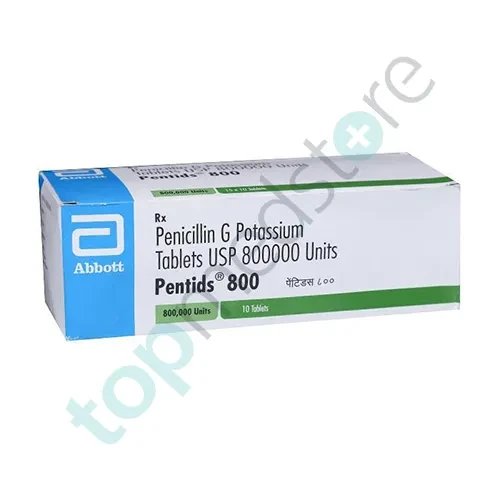
| Product name | Penicillin G Potassium 800mg |
|---|---|
| Active Ingredient | Penicillin G Potassium |
| Dosage | 800mg |
| Drug Type | Tablets |
| Indication | Bacterial Infections |
| Manufacturer | Abbott |
Total $111.60
Penicillin G Potassium 800mg is an antibiotic medicine used to treat serious bacterial infections. It belongs to the penicillin group of antibiotics.
This medicine kills bacteria by breaking their protective outer layer. A general physician or infectious disease specialist usually prescribes it in hospitals or under close medical supervision.
A bacterial infection means harmful bacteria have entered the body and are multiplying. These bacteria can spread in areas like the blood, lungs, skin, throat, or bones.
Common symptoms include fever, pain, swelling, weakness, or infection at a specific body site.
Penicillin medicines do not work for viral infections like cold or flu. They only work against bacteria.
Penicillin G Potassium 800mg is used for stronger infections that need fast and powerful treatment.
Doctors prescribe Penicillin G Potassium 800mg for serious bacterial infections.
It is used for streptococcal infections._x000B_ This means infections caused by Streptococcus bacteria. These bacteria can affect the throat, skin, or blood.
It is also used for pneumonia._x000B_ Pneumonia means infection in the lungs. It can cause cough, fever, chest pain, and breathing difficulty.
Doctors use it for skin and soft tissue infections._x000B_ This means infections in the skin or deeper tissues. These infections can cause redness, pain, and swelling.
It is also used for syphilis._x000B_ Syphilis is a sexually transmitted bacterial infection. It can affect many organs if not treated early.
In severe cases, it may be used for bloodstream infections (sepsis)._x000B_ Sepsis means infection has spread into the blood and affects the whole body. This is a serious condition.
Penicillin G Potassium 800mg belongs to the beta-lactam penicillin class.
It works by stopping bacteria from forming their cell wall._x000B_ A cell wall is a protective covering around bacteria. It keeps them strong and alive.
In simple words, this medicine weakens bacteria by breaking their outer protection.
Once the wall is damaged, bacteria cannot survive. They slowly die off.
This allows the body’s immune system to clear the infection.
Like all antibiotics, Penicillin G Potassium 800mg may cause side effects. Most are mild and temporary.
Common side effects include:
Nausea – feeling like vomiting
Vomiting – throwing up
Diarrhea – loose stools or frequent bowel movements
Some patients may notice mild skin rash or itching. This can mean sensitivity to the medicine.
If given as an injection, there may be pain or swelling at the injection site. This usually goes away on its own.
Rare side effects include allergic reactions._x000B_ This may cause rash, swelling of the face or lips, or difficulty in breathing.
Very rarely, a severe allergic reaction called anaphylaxis can occur. This needs emergency medical care.
Long-term use may rarely affect blood counts._x000B_ Blood counts mean levels of white and red blood cells in the body.
Doctors advise using Penicillin G Potassium 800mg exactly as prescribed.
A general physician or specialist decides the dose based on infection severity.
Inform your doctor if you have a penicillin allergy._x000B_ Allergy means your body reacts badly to the medicine.
Do not use this medicine on your own. Incorrect use can make bacteria stronger and harder to treat.
Always complete the full course of treatment. Even if you feel better early, stopping too soon can bring the infection back.
If you are receiving this medicine in a hospital, doctors may monitor your blood and response closely.
Follow your doctor’s instructions carefully. A general physician may adjust treatment based on test results and recovery.
If prescribed, Penicillin G Potassium 800mg should only be taken from trusted medical sources.
Penicillin G Potassium 800mg is a prescription medicine. A qualified general physician or infectious disease specialist should supervise its use. This content is for informational purposes only. It does not replace medical advice, diagnosis, or treatment. Always consult your doctor before starting or changing this medicine.
$207.00 – $680.00
$83.10 – $211.20
$142.00 – $464.00
$58.50 – $147.60