Sodium Valproate-Valproic Acid 300mg
$58.00 – $188.00
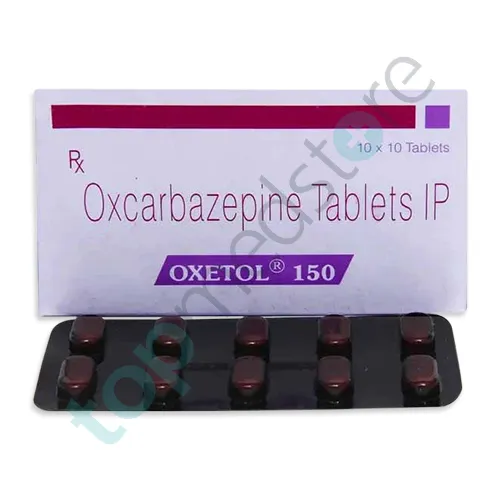
| Product name | Oxcarbazepine 150mg |
|---|---|
| Active Ingredient | Oxcarbazepine |
| Dosage | 150mg |
| Drug Type | Tablets |
| Indication | Epilepsy |
| Manufacturer | Sun Pharma |
Total $33.50
Sudden seizures can disrupt daily life and affect safety, focus, and confidence. Oxcarbazepine 150mg tablet helps control seizures and supports better brain stability. It belongs to a group of medicines called antiepileptic drugs (AEDs). Doctors use this medicine to manage epilepsy and seizure disorders. A neurologist often prescribes this medicine based on the patient’s condition.
Epilepsy is a neurological condition where the brain shows abnormal electrical activity. This leads to seizures. Seizures can cause sudden jerking movements, confusion, loss of awareness, or staring spells. Some people also feel unusual sensations before a seizure starts. These are called auras.
Oxcarbazepine 150mg tablet helps reduce the frequency and intensity of seizures. Doctors often start with a lower dose like 150 mg and increase it slowly based on response. This approach helps improve safety and tolerance.
Doctors prescribe Oxcarbazepine 150mg tablet to manage different types of seizure disorders.
Doctors prescribe it for partial seizures, also known as focal seizures. These seizures start in one area of the brain and may spread to other areas. The medicine helps control abnormal brain signals.
Doctors also use it as part of combination therapy with other antiepileptic medicines. This helps improve seizure control in patients who need more than one treatment.
In some cases, doctors use it for generalized seizures, based on clinical judgment. The medicine helps reduce seizure episodes and improves quality of life.
Regular use helps patients stay stable and reduces the risk of sudden seizure attacks.
Oxcarbazepine blocks voltage-gated sodium channels in neurons. This stabilizes hyperexcited neural membranes and inhibits repetitive firing.
In simple words, Oxcarbazepine 150mg tablet calms overactive brain signals. It slows down the abnormal electrical activity that causes seizures.
This helps prevent sudden bursts of activity in the brain. As a result, seizures become less frequent and less severe.
Patients may experience some side effects while using Oxcarbazepine 150mg tablet, especially during the early phase of treatment.
Common side effects include dizziness, sleepiness, headache, and fatigue. Some patients may also feel unsteady or have blurred vision.
Moderate side effects include nausea, vomiting, and problems with coordination. Some people may also notice low sodium levels, which can cause weakness or confusion.
Rare side effects include severe skin reactions, allergic reactions, or mood changes. Seek immediate medical help if you notice rash, swelling, or unusual behavior.
Most side effects improve as the body adjusts to the medicine.
Doctors advise taking Oxcarbazepine 150mg tablet exactly as prescribed. Take it at the same time every day to maintain stable levels in the body. Swallow the tablet with water.
Do not stop this medicine suddenly. Sudden withdrawal can trigger seizures. Always follow your doctor’s instructions for dose changes.
Tell your doctor if you have kidney disease, liver problems, or a history of low sodium levels. These conditions may need careful monitoring.
Avoid alcohol, as it can increase drowsiness and affect brain function. Be careful while driving or operating machinery until you know how the medicine affects you.
This medicine may interact with other antiepileptic drugs, hormonal contraceptives, or certain medications. Always share your full medication list with your doctor.
A neurologist will monitor your condition and adjust the dose as needed.
Always purchase Oxcarbazepine 150mg tablet from trusted pharmacy sources to ensure safety and effectiveness.
This content is for informational purposes only. Use Oxcarbazepine 150mg tablet only under the supervision of a qualified neurologist or healthcare professional. Do not self-medicate or change your dosage without medical advice.
$58.00 – $188.00
$50.00 – $164.00
$55.80 – $183.60
$36.90 – $122.40