Prazosin ER 5mg
$88.20 – $288.00
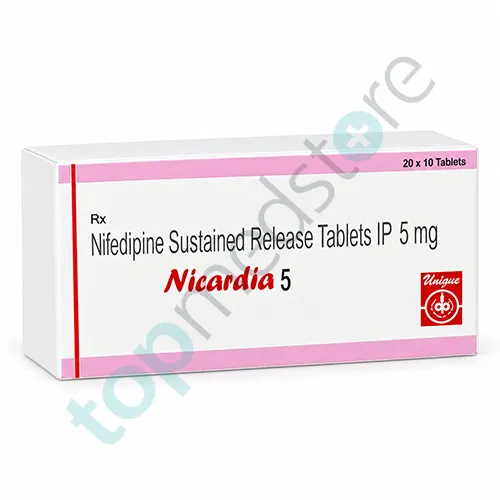
Nifedipine is a prescription medicine used to treat high blood pressure (hypertension) and certain types of chest pain (angina). A cardiologist often prescribes this medicine to help reduce pressure on the heart and improve blood flow in the body.
High blood pressure happens when the force of blood pushing against the artery walls stays too high. Over time, this can damage the heart, brain, kidneys, and blood vessels. Nifedipine helps relax blood vessels so blood can flow more easily and safely.
This medicine belongs to a group called calcium channel blockers. These medicines control how calcium moves into muscle cells of the heart and blood vessels. Calcium is important for muscle contraction, but too much activity in blood vessel muscles can cause tightening. Nifedipine helps prevent this tightening.
Doctors may also use Nifedipine in certain cases of Raynaud’s phenomenon, a condition where fingers or toes become cold and painful due to poor blood circulation.
Nifedipine works mainly on blood vessels. It blocks calcium from entering the muscle cells of blood vessel walls. When calcium entry is reduced, the muscles relax.
Relaxed blood vessels become wider. This widening is called vasodilation. When blood vessels are wider, blood flows more smoothly and with less resistance. This reduces blood pressure and improves circulation.
In the heart, Nifedipine helps reduce the workload. When blood pressure is lower, the heart does not need to pump as forcefully. This reduces strain on the heart muscles and helps prevent chest pain episodes in some patients.
By improving blood flow, the medicine also helps reduce symptoms like headache, dizziness caused by high blood pressure, and chest tightness in angina.
A cardiologist may monitor blood pressure and heart response during treatment, especially when starting or adjusting the dose.
The main use of Nifedipine is the treatment of hypertension (high blood pressure). It helps keep blood pressure under control and reduces the risk of complications like heart attack, stroke, and kidney damage.
It is also used for angina pectoris, which is chest pain caused by reduced blood flow to the heart. By improving blood flow, Nifedipine helps reduce chest pain episodes and improves physical activity tolerance.
Doctors may also prescribe it for vasospastic angina, a condition where blood vessels in the heart suddenly tighten and reduce oxygen supply.
Another important use is Raynaud’s phenomenon, where blood vessels in fingers or toes narrow excessively in cold or stress conditions. This causes pain, numbness, and color changes in the skin. Nifedipine helps relax these vessels and improve blood flow.
In some cases, a cardiologist may use Nifedipine as part of combination therapy when one medicine alone is not enough to control blood pressure.
It is not used for emergency blood pressure lowering unless specifically prescribed in controlled medical settings.
Nifedipine works by blocking calcium channels in the smooth muscles of blood vessels.
Calcium normally helps muscles contract. When calcium enters blood vessel walls, it causes them to tighten. Nifedipine reduces this calcium entry, which relaxes the vessel muscles.
When blood vessels relax, they become wider. This allows blood to flow more easily and reduces the pressure inside the arteries. As a result, blood pressure decreases in a steady and controlled way.
In the heart, reduced blood pressure means less effort is needed to pump blood. This lowers oxygen demand of the heart and helps reduce chest pain in angina patients.
The medicine does not directly cure heart disease, but it helps manage symptoms and reduce long-term risks by controlling blood pressure.
A cardiologist may adjust dosage based on patient response, age, and other health conditions. Regular monitoring is important to avoid too low blood pressure.
Patients are advised to take the medicine regularly at the same time each day for stable results.
Like all medicines, Nifedipine may cause side effects, although many people tolerate it well.
Common side effects include headache, flushing (feeling warm and red in the face), dizziness, and swelling in the ankles or feet. Swelling happens because blood vessels become more relaxed and fluid may collect in lower limbs.
Some patients may experience mild nausea, tiredness, or low blood pressure. This can cause lightheadedness, especially when standing up quickly.
A faster heartbeat (palpitations) may also occur in some people because the body reacts to lowered blood pressure.
Rare but serious side effects include severe chest pain, fainting, or very low blood pressure. Immediate medical attention is needed if these occur.
Patients with heart conditions should use this medicine under close supervision of a cardiologist, especially when starting treatment or changing dose.
Most side effects reduce as the body adjusts to the medicine over time.
This content is for educational purposes only and does not replace professional medical advice, diagnosis, or treatment. Nifedipine should only be used under the supervision of a qualified cardiologist or healthcare professional. Always follow your doctor’s instructions and attend regular check-ups for safe blood pressure and heart condition management.
| Product name | Nifedipine |
|---|---|
| Category | Blood Pressure Medicines |
| Shipping offer | Free shipping on orders of $110.00 or more |
$88.20 – $288.00
$87.00 – $284.00
$28.50 – $93.60
$39.90 – $130.80