Rifaximin 200mg
$207.00 – $680.00
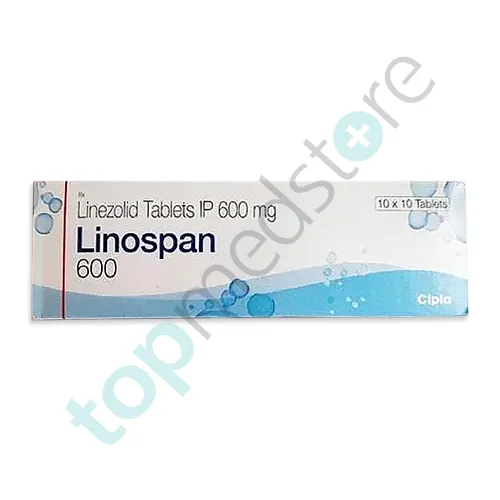
Linezolid is a prescription antibiotic medicine used to treat serious bacterial infections in the body. A bacterial infection means harmful bacteria enter the body, multiply, and cause illness. This can lead to fever, pain, swelling, weakness, and damage to organs.
Doctors use Linezolid mainly when infections are severe or when other antibiotics stop working. It is often used for lung infections, skin infections, and deep tissue infections.
A general physician, pulmonologist (lung specialist), or an infectious disease specialist may prescribe this medicine based on the patient’s condition.
Linezolid belongs to the oxazolidinone antibiotic group.
An oxazolidinone antibiotic is a medicine that stops bacteria from making proteins they need to survive.
This medicine is important for treating drug-resistant infections, where normal antibiotics fail to work.
Linezolid works by stopping bacteria from growing and multiplying inside the body.
Bacteria need proteins to survive. They use proteins to grow, repair, and spread infection.
Linezolid stops bacteria from making these proteins.
It blocks a structure in bacteria called the ribosome.
A ribosome is the part of bacteria that builds proteins.
When ribosomes stop working, bacteria cannot make proteins. Without proteins, bacteria become weak and die slowly.
As the bacteria reduce, the body starts to recover. Symptoms like fever, pain, swelling, redness, and pus begin to improve.
Pus is a thick fluid made of dead bacteria and dead cells from the body’s fight against infection.
Doctors usually give Linezolid for a fixed number of days. Patients must complete the full course even if they feel better early.
Stopping early can leave some bacteria alive, and the infection may come back.
Doctors use Linezolid for serious bacterial infections that are hard to treat.
It is commonly used for pneumonia, especially hospital-acquired pneumonia. This condition can cause fever, cough, chest pain, and breathing difficulty.
A pulmonologist often uses Linezolid for severe lung infections that do not respond to other antibiotics.
It is also used for skin and soft tissue infections, such as infected wounds, boils, and abscesses.
An abscess is a pocket of pus that forms under the skin due to infection.
Linezolid is very useful for MRSA infections.
MRSA (Methicillin-resistant Staphylococcus aureus) is a strong bacteria that does not respond to many common antibiotics.
Doctors may also use Linezolid for deep infections where other medicines fail or when bacteria are resistant.
Linezolid works by stopping bacteria from making proteins.
Bacteria need proteins to grow, repair, and survive.
Inside bacteria, proteins are made by a structure called the ribosome.
Linezolid blocks this ribosome and stops protein production.
When bacteria cannot make proteins, they stop growing and slowly die.
As bacteria die, the infection becomes weaker and symptoms reduce.
The body’s immune system then removes the remaining bacteria.
Doctors give Linezolid at fixed times every day so the medicine stays active in the body.
Patients must take the full treatment course. This helps prevent the infection from returning or becoming resistant.
Like all medicines, Linezolid may cause side effects. Some are mild, while some may be serious.
Common side effects include nausea, vomiting, diarrhea, headache, and stomach pain.
Nausea means feeling like vomiting.
Vomiting means throwing up food or liquid from the stomach.
Some people may feel tired, dizzy, or have a bad taste in the mouth.
With longer use, Linezolid can affect blood cells.
Low blood cell count means the body has fewer cells to carry oxygen and fight infection. This can cause weakness and tiredness.
Rare but serious side effects include vision problems, nerve pain, unusual bleeding, or severe weakness.
Patients should contact a doctor quickly if they notice blurred vision, heavy fatigue, or signs of bleeding.
A general physician, pulmonologist, or infectious disease specialist should always monitor treatment.
This content is for educational purposes only. It does not replace medical advice. Always consult a general physician, pulmonologist, or infectious disease specialist before using Linezolid. Use this medicine only under proper medical supervision.
| Product name | Linezolid |
|---|---|
| Category | Infection Treatment |
| Shipping offer | Free shipping on orders of $110.00 or more |
$207.00 – $680.00
$83.10 – $211.20
$142.00 – $464.00
$58.50 – $147.60