Empagliflozin 25mg
$165.00 – $420.00
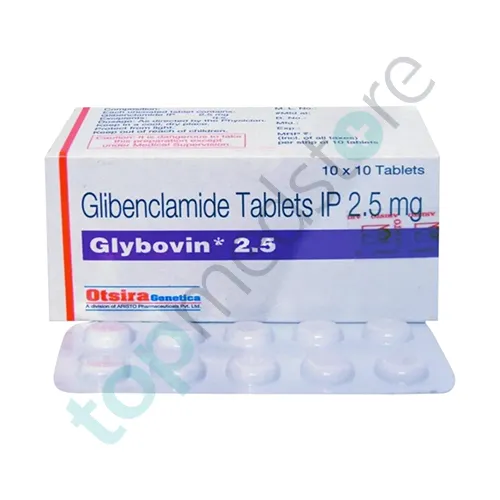
| Product name | Glyburide/Glibenclamide 2.5mg |
|---|---|
| Active Ingredient | Glyburide-Glibenclamide |
| Dosage | 2.5mg |
| Drug Type | Tablets |
| Indication | Type 2 Diabetes |
| Manufacturer | Aristo |
Total $25.00
Glyburide 2.5mg, also known as Glibenclamide, is a prescription medicine used to treat type 2 diabetes mellitus. It is usually prescribed by a physician or diabetologist when blood sugar is not controlled with diet, exercise, or other first-line medicines alone.
This medicine belongs to a group called sulfonylureas (a class of diabetes medicines that help the pancreas release more insulin into the blood).
In simple words, Glibenclamide helps lower blood sugar by helping your body produce more insulin naturally.
In type 2 diabetes (a long-term condition where blood sugar remains high because the body does not use insulin properly or does not make enough insulin), glucose stays in the blood instead of moving into cells for energy.
Insulin is a natural hormone made by the pancreas. It acts like a key that helps sugar enter body cells.
Glibenclamide works by stimulating the pancreas to release more insulin. When insulin increases, more sugar moves from the blood into the body’s cells, lowering blood glucose levels.
This helps control both fasting blood sugar (sugar after not eating for several hours) and post-meal blood sugar (sugar after eating food).
In simple words, this medicine helps your pancreas release more insulin so blood sugar levels stay under control.
This medicine is mainly used for type 2 diabetes mellitus, especially when blood sugar remains high despite lifestyle changes.
It helps control:
Doctors prescribe it to improve overall glycemic control (keeping blood sugar within a healthy and stable range).
It is also used to reduce the risk of long-term complications of diabetes such as:
Nerve damage (neuropathy)
Kidney damage (nephropathy)
Eye problems (retinopathy)
In clinical practice, a doctor uses this medicine to help maintain better daily blood sugar control in type 2 diabetes patients.
Glibenclamide acts on the pancreas (an organ that produces insulin, the hormone responsible for controlling blood sugar levels).
It stimulates beta cells in the pancreas to release more insulin into the bloodstream.
Insulin then helps move glucose (sugar) from the blood into body cells, where it is used for energy.
As insulin levels increase, blood sugar levels gradually decrease and become more stable.
In simple words, this medicine helps your body release more insulin so sugar in your blood is used properly for energy instead of building up.
Some people may experience low blood sugar (hypoglycemia, a condition where blood sugar drops too low, causing sweating, shakiness, dizziness, hunger, or weakness). This is the most important side effect to watch for.
There may be mild nausea or stomach discomfort, especially at the beginning of treatment.
Some individuals may feel headache or dizziness, which usually improves over time.
In some cases, weight gain may occur due to increased insulin action in the body.
Rarely, skin reactions like rash or itching can happen.
Most side effects can be managed with regular meals and proper dosage guidance.
This medicine should be taken only under the supervision of a physician or diabetologist.
Do not skip meals, as this increases the risk of low blood sugar.
Monitor blood sugar regularly for safe and effective control.
Be careful while driving or operating machinery if symptoms of low blood sugar occur.
Inform your doctor if you have liver disease, kidney disease, or frequent episodes of low blood sugar.
Follow a proper diet and exercise plan along with this medicine for best results.
This content is for informational purposes only and does not replace medical advice, diagnosis, or treatment. Always consult your physician or diabetologist before starting or changing any medicine.
$165.00 – $420.00
$77.00 – $252.00
$70.00 – $229.60
$60.20 – $197.12