
Everolimus 0.75mg
$304.40 – $996.40
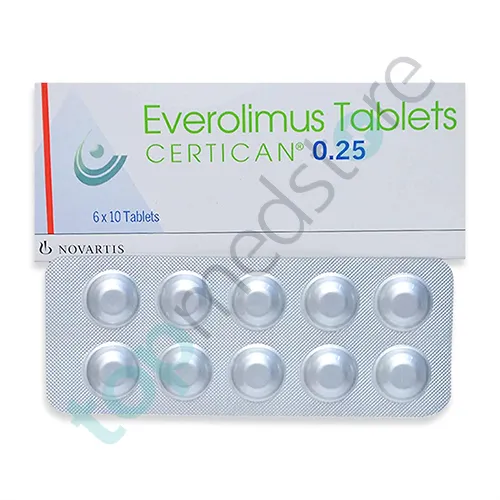
Everolimus is a prescription medicine used to treat certain types of cancer, tumors, and some conditions related to the immune system. Doctors may also prescribe it after an organ transplant to help prevent organ rejection.
An organ transplant is a surgery where a damaged organ is replaced with a healthy organ from another person.
Everolimus tablets are commonly used for cancers such as kidney cancer, breast cancer, and certain neuroendocrine tumors.
A tumor is an abnormal growth of cells inside the body.
Neuroendocrine tumors are rare tumors that start in hormone-producing cells.
The medicine belongs to a group called targeted therapy medicines. These medicines target specific cancer cell processes and help slow their growth.
People often search for Everolimus uses, targeted cancer therapy, medicine for kidney cancer, tumor treatment tablets, Everolimus for breast cancer, or anti-cancer medicine when learning about this medicine.
An oncologist usually prescribes this medicine. An oncologist is a doctor who treats cancer.
Everolimus may help slow cancer growth and improve disease control in some patients.
Everolimus works by blocking certain signals that cancer cells need to grow and multiply.
Cancer cells grow faster than normal cells. Everolimus slows down this growth process.
The medicine targets a protein pathway called mTOR.
A protein pathway is a system inside cells that controls growth, survival, and energy use.
By blocking the mTOR pathway, Everolimus may reduce the growth of cancer cells and tumors.
The medicine may also reduce the growth of blood vessels that supply nutrients to tumors.
This may help slow tumor spread in some patients.
When used after organ transplant, Everolimus helps weaken the immune system slightly to reduce the risk of organ rejection.
Doctors usually monitor patients closely during treatment with blood tests and scans.
Doctors prescribe Everolimus for several serious medical conditions.
One common use is for certain types of kidney cancer and breast cancer.
Doctors may also prescribe Everolimus tablets for neuroendocrine tumors and some non-cancer conditions involving abnormal cell growth.
The medicine is also used after certain organ transplants to help prevent rejection of the transplanted organ.
Some patients with advanced cancers may use this medicine as part of long-term cancer treatment.
People often search online for best targeted therapy medicine, Everolimus cancer treatment, tablet for tumor growth, medicine for advanced kidney cancer, anti-cancer targeted tablets, or Everolimus for transplant patients when discussing this medicine.
Regular monitoring is important during treatment.
Everolimus works by slowing the growth and spread of abnormal cells.
The medicine blocks the mTOR pathway inside cells.
This pathway helps cells grow and divide.
By blocking this pathway, Everolimus reduces cancer cell activity and slows tumor growth.
The medicine may also reduce the formation of new blood vessels that feed tumors.
This may limit the tumor’s supply of oxygen and nutrients.
When used after transplant surgery, the medicine lowers immune system activity to help protect the transplanted organ.
Patients should take the medicine exactly as prescribed and attend regular follow-up visits.
Doctors may adjust the dose depending on treatment response and side effects.
Like all medicines, Everolimus may cause side effects in some people.
Common side effects include mouth ulcers, tiredness, weakness, diarrhea, nausea, decreased appetite, rash, or infections.
An ulcer is a painful sore or damaged area.
Some patients may develop swelling, cough, or increased blood sugar levels during treatment.
Rarely, serious side effects may include severe infections, lung problems, kidney issues, or liver problems.
Patients should contact a doctor if they develop breathing difficulty, fever, severe weakness, chest pain, or unusual bleeding.
Because the medicine affects the immune system, patients may become more likely to develop infections.
People with liver disease, diabetes, or ongoing infections should inform their doctor before using this medicine.
Doctors usually monitor blood counts, kidney function, and liver function during treatment.
This information is for educational purposes only and does not replace medical advice. Everolimus should only be used under the supervision of an oncologist or qualified healthcare provider. Always follow the prescribed dosage instructions and attend regular medical monitoring during treatment.
| Product name | Everolimus |
|---|---|
| Category | Targeted Cancer Treatments |
| Shipping offer | Free shipping on orders of $110.00 or more |
$304.40 – $996.40
$101.50 – $332.40
$115.50 – $378.00
$205.00 – $670.00