Agomelatine 25mg
$80.10 – $261.60
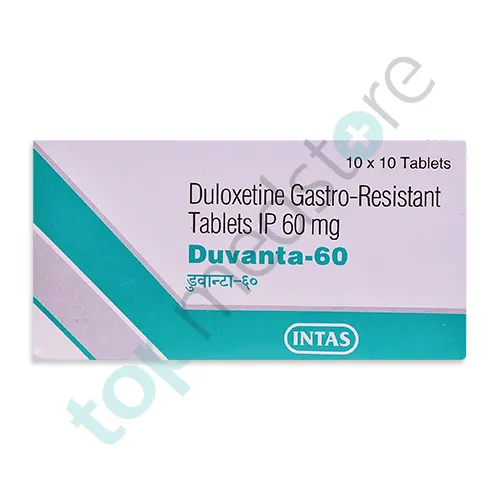
| Product name | Duloxetine 60mg |
|---|---|
| Active Ingredient | Duloxetine |
| Dosage | 60mg |
| Drug Type | Tablets |
| Indication | Major Depressive Disorder |
| Manufacturer | Intas Pharma |
Total $51.90
Duloxetine 60mg is a prescription medicine used to treat depression, anxiety disorders, and certain types of nerve-related pain. It is commonly prescribed by a psychiatrist, neurologist, or physician depending on the patient’s condition and symptoms.
This medicine helps improve mood, reduce excessive anxiety, and also relieves chronic nerve pain by acting on brain and nerve chemicals.
In simple words, Duloxetine 60mg helps balance brain signals so mood improves and nerve pain becomes less intense over time.
The brain and nervous system use chemical messengers called neurotransmitters (substances that carry signals between nerve cells) to control mood, emotions, and pain response. Two important neurotransmitters involved are serotonin and norepinephrine.
In conditions like depression (a mental health disorder with persistent sadness, low energy, and loss of interest) and anxiety disorders (excessive worry, fear, or tension that affects daily life), these chemicals become imbalanced. This leads to emotional instability and difficulty managing stress.
In neuropathic pain (nerve pain caused by damaged or overactive nerves, often felt as burning, tingling, or electric shock-like pain), the nervous system becomes more sensitive and sends stronger pain signals than normal.
Duloxetine works by increasing serotonin and norepinephrine levels in the brain and spinal cord. It prevents their reuptake, meaning these chemicals remain active in the nervous system for a longer time.
This helps improve mood regulation and reduces the intensity of pain signals coming from damaged nerves.
In simple words, this medicine corrects chemical imbalance in the brain and nerves so mood improves and pain signals reduce.
Duloxetine 60mg is mainly used for major depressive disorder, where a person experiences long-lasting sadness, low motivation, and emotional exhaustion.
It is also used for generalized anxiety disorder, where there is constant worry, restlessness, or tension without a specific cause.
Doctors prescribe it for neuropathic pain, which is nerve-related pain that may feel like burning, tingling, or shooting sensations, especially in conditions like diabetic nerve damage.
It is also used for chronic musculoskeletal pain, including long-term back pain or joint pain that does not respond well to simple painkillers.
In clinical practice, a psychiatrist or neurologist uses this medicine when both emotional symptoms and nerve pain need long-term, stable control.
Duloxetine belongs to a class of medicines called SNRIs (Serotonin-Norepinephrine Reuptake Inhibitors, which are medicines that increase mood-regulating and pain-modulating chemicals in the nervous system).
It works by increasing serotonin and norepinephrine levels in the brain and spinal cord. These chemicals help regulate emotional balance, motivation, stress response, and pain perception.
By blocking their reabsorption into nerve cells, Duloxetine allows these chemicals to stay active for longer periods, improving communication between nerve pathways.
This leads to better emotional stability and reduced sensitivity to pain signals.
In simple words, this medicine improves mood and reduces nerve pain by enhancing important brain and nerve chemical activity.
Some people may experience nausea or mild stomach discomfort, especially during the initial phase of treatment.
There may be dry mouth or reduced appetite, which often improves with continued use.
Some individuals may notice sleep-related changes, such as difficulty sleeping or feeling drowsy during the day.
There may also be dizziness, headache, or increased sweating, especially in early treatment.
In some cases, mild increase in blood pressure may occur, so monitoring may be required.
Rarely, fatigue, restlessness, or emotional changes may happen as the body adjusts to the medicine.
Most side effects are temporary and reduce over time.
This medicine should be taken only under the supervision of a psychiatrist, neurologist, or physician.
Do not stop the medicine suddenly, as it may cause withdrawal symptoms such as dizziness, irritability, or mood changes.
Avoid alcohol, as it may increase drowsiness and reduce mental alertness.
Be careful while driving or performing tasks that require focus, especially at the beginning of treatment.
Inform your doctor if you have liver disease, high blood pressure, or a history of bipolar disorder.
Regular follow-up is important to monitor progress and adjust dosage if needed.
This content is for informational purposes only and does not replace medical advice, diagnosis, or treatment. Always consult your psychiatrist, neurologist, or physician before starting or changing any medicine.
$80.10 – $261.60
$73.00 – $240.00
$39.00 – $128.00
$50.40 – $165.60