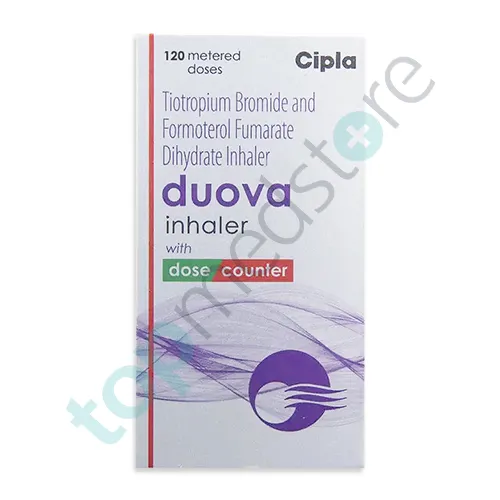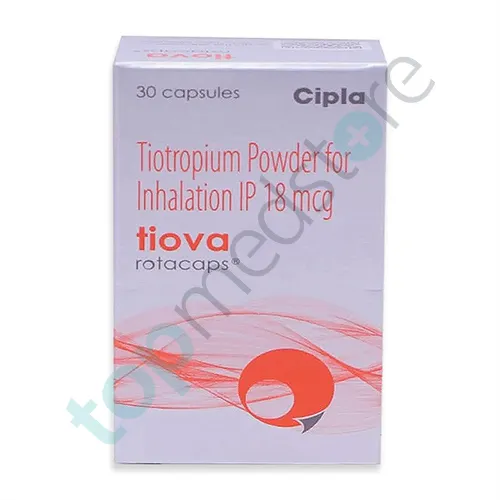
Tiotropium Bromide 18mcg
$144.00 – $470.40
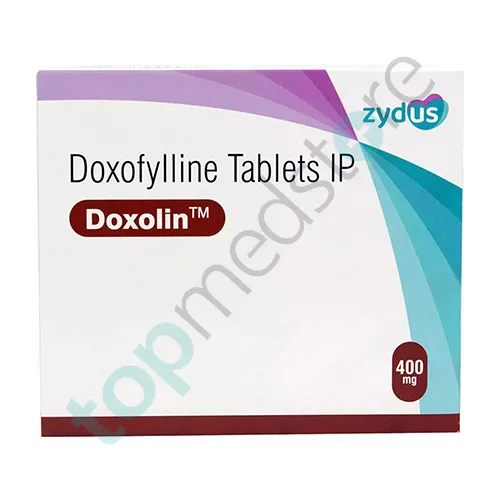
| Product name | Doxofylline 400mg |
|---|---|
| Active Ingredient | Doxofylline |
| Dosage | 400mg |
| Drug Type | Tablets |
| Indication | Asthma |
| Manufacturer | Zydus Health |
Total $43.20
Doxofylline 400mg is a prescription medicine used to treat breathing problems such as asthma and chronic obstructive pulmonary disease (COPD).
Asthma is a long-term lung condition that causes breathing difficulty, chest tightness, wheezing, and cough. COPD is a chronic lung disease that makes it hard to breathe and usually worsens over time.
Doctors prescribe Doxofylline 400mg tablets to help open airways and improve airflow in the lungs.
The medicine belongs to a group of drugs called xanthines. These medicines relax airway muscles and make breathing easier.
Pulmonologists commonly prescribe Doxofylline tablets for patients with asthma or COPD. A pulmonologist is a doctor who treats lung and breathing disorders.
Many patients use Doxofylline 400mg as part of long-term respiratory care to reduce breathing difficulty and improve daily activity.
The medicine helps control symptoms but does not cure asthma or COPD permanently.
Doxofylline 400mg works by relaxing the muscles in the airways of the lungs.
When airway muscles tighten, breathing becomes difficult. This is common in asthma and COPD.
Doxofylline tablets help relax these muscles and widen the air passages.
As airways open, oxygen can move more easily into the lungs.
This helps reduce symptoms such as shortness of breath, wheezing, chest tightness, and coughing.
The medicine also helps improve airflow during physical activity and daily tasks.
Doctors prescribe Doxofylline 400mg tablets because better airflow supports easier breathing and improved lung function.
Patients may notice gradual improvement in breathing comfort after regular use.
The medicine works best when taken regularly as prescribed, especially in long-term respiratory conditions.
Doctors mainly prescribe Doxofylline 400mg for the treatment of asthma.
Patients with asthma may experience breathing difficulty due to narrowed airways and inflammation in the lungs.
Doxofylline tablets help reduce airway tightening and improve breathing.
Doctors also prescribe the medicine for COPD (chronic obstructive pulmonary disease).
COPD includes conditions such as chronic bronchitis and emphysema. These conditions make breathing progressively difficult.
Chronic bronchitis causes long-term cough and mucus production. Emphysema damages lung air sacs and reduces oxygen exchange.
Some healthcare providers use Doxofylline 400mg tablets as part of combination therapy for better lung support.
Doctors may also recommend avoiding triggers such as dust, smoke, pollution, and allergens.
Healthy lifestyle habits, breathing exercises, and inhaler use may improve treatment results.
Doxofylline 400mg works by relaxing the muscles around the airways in the lungs.
The medicine helps open narrowed air passages so air can flow more freely.
As airways relax, breathing becomes easier and oxygen levels may improve.
Doxofylline tablets also help reduce airway resistance, which means the lungs need less effort to breathe.
Doctors usually recommend taking Doxofylline 400mg tablets at regular intervals for stable symptom control.
The medicine may be taken with food to reduce stomach discomfort in some patients.
Patients should follow the prescribed dose carefully and avoid self-adjusting the medication.
Stopping the medicine suddenly may worsen breathing symptoms in some cases.
Doctors may adjust the dose based on symptom severity, lung function, and overall health condition.
Like all medicines, Doxofylline 400mg may cause side effects in some patients. Most side effects are mild and temporary.
Common side effects include nausea, stomach discomfort, headache, dizziness, and restlessness.
Some patients may feel mild sleep disturbances or increased heart rate.
Taking the medicine after food may help reduce stomach-related side effects.
Rare but serious side effects may happen in some patients. These include severe heartbeat changes, allergic reactions, vomiting, or chest discomfort.
Patients should seek medical help if they develop severe palpitations, difficulty breathing, or signs of allergic reaction.
People with heart disease, liver problems, or seizure disorders should inform their doctor before using Doxofylline tablets.
Doctors may monitor response and adjust treatment if needed.
This content is for educational purposes only. It does not replace medical advice or treatment. Always consult a pulmonologist or healthcare professional before starting or stopping Doxofylline 400mg. Use this medicine only under proper medical supervision.
$144.00 – $470.40
$125.40 – $410.40
$132.00 – $432.00