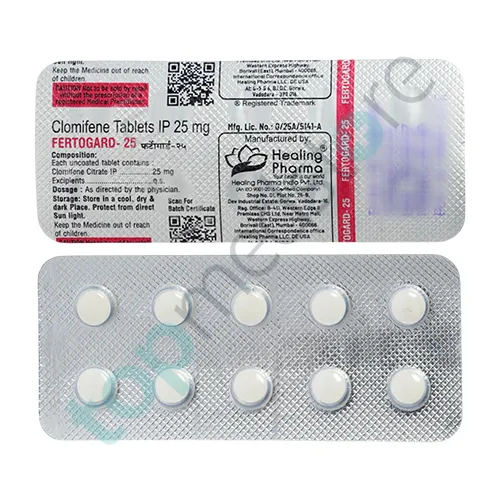
Clomifene/Clomiphene 100mg
$150.50 – $494.00
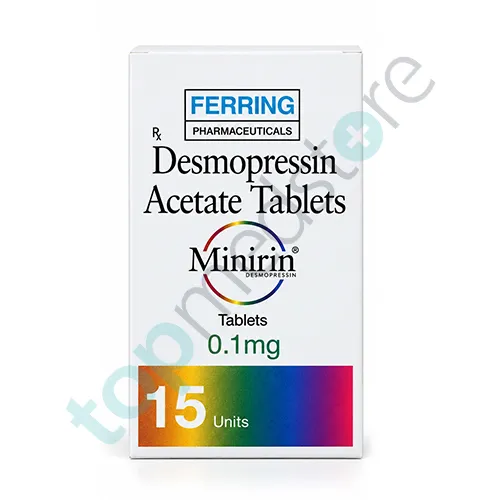
| Product name | Desmopressin 0.1mg |
|---|---|
| Active Ingredient | Desmopressin |
| Dosage | 0.1mg |
| Drug Type | Tablets |
| Indication | Diabetes Insipidus |
| Manufacturer | Ferring |
Total $48.30
Desmopressin 0.1mg is a prescription medicine used to control excessive urination and bedwetting problems. It is commonly prescribed by a physician, pediatrician, or endocrinologist depending on the condition being treated.
This medicine is a synthetic (man-made) form of a natural hormone in the body called ADH (antidiuretic hormone, a hormone that controls how much water the kidneys keep in the body).
In simple words, Desmopressin helps reduce urine production so the body holds more water and produces less urine.
The kidneys are responsible for filtering blood and producing urine. Normally, the hormone ADH (vasopressin) tells the kidneys how much water to keep and how much to remove.
In some conditions, the body does not produce enough ADH or does not respond properly to it. This leads to excessive urination (passing large amounts of urine frequently) or bedwetting in children and adults at night.
Desmopressin works by replacing or mimicking ADH in the body. It acts on the kidneys and reduces the amount of water that is lost through urine.
As a result, urine production decreases, especially during the night, helping improve bladder control.
In simple words, this medicine tells the kidneys to hold more water so urine production reduces and bladder control improves.
Desmopressin is mainly used for bedwetting (nocturnal enuresis), especially in children and sometimes in adults.
It is also used in diabetes insipidus (a condition where the body produces very large amounts of urine due to lack of ADH hormone).
Doctors may prescribe it for frequent nighttime urination (nocturia), where a person wakes up multiple times at night to urinate.
In some cases, it is used for certain medical conditions where water balance in the body needs to be controlled under specialist supervision.
In clinical practice, physicians use this medicine when urine production needs to be reduced by controlling kidney water regulation.
Desmopressin acts like the natural hormone ADH (vasopressin).
It works on the kidneys and increases water reabsorption, which means more water is taken back into the body instead of being passed out as urine.
This reduces urine volume and helps the bladder hold urine for a longer time.
Because of this effect, nighttime urine production decreases, improving sleep quality and reducing bedwetting episodes.
In simple words, this medicine reduces urine formation by helping the kidneys retain more water.
Some people may experience headache, nausea, or mild stomach discomfort, especially at the beginning of treatment.
There may be mild fluid retention, meaning the body holds more water than usual.
In some cases, low sodium levels in the blood (hyponatremia, meaning too little salt in the blood due to excess water retention) may occur. This is a serious condition and requires medical attention.
Symptoms of low sodium may include confusion, headache, or fatigue.
Rarely, swelling in hands or feet may occur due to water retention.
Most side effects can be avoided with proper dose control and fluid intake guidance.
This medicine should be used only under the supervision of a physician, pediatrician, or specialist.
Fluid intake should be carefully controlled during treatment to avoid water overload.
Do not drink excessive water after taking this medicine unless advised by a doctor.
Regular monitoring of sodium levels may be required in long-term use.
Inform your doctor if you have kidney disease, heart problems, or electrolyte imbalance before starting treatment.
Do not change the dose without medical advice.
Proper monitoring ensures safe and effective use.
This content is for informational purposes only and does not replace medical advice, diagnosis, or treatment. Always consult your physician or specialist before starting or changing any medicine.
$150.50 – $494.00
$48.00 – $156.00
$55.00 – $180.00
$183.00 – $600.00