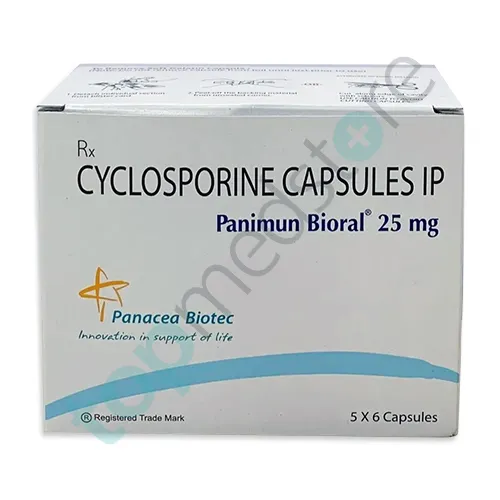
Cyclosporine 0.05%-0.4ml
$128.70 – $421.20

| Product name | Cyclosporine 100mg |
|---|---|
| Active Ingredient | Cyclosporine |
| Dosage | 100mg |
| Drug Type | Capsules |
| Indication | Organ Transplant Rejection Prevention |
| Manufacturer | Panacea Biotec Ltd |
Total $189.00
Cyclosporine 100mg is a prescription medicine used to control the body’s immune system. It is mainly used after organ transplants and in certain autoimmune diseases.
The immune system protects the body from infections. But sometimes it becomes too active and attacks healthy tissues. In organ transplant patients, the immune system may attack the new organ, thinking it is foreign.
Doctors prescribe Cyclosporine capsules to reduce this immune response and protect the transplanted organ. It is a powerful medicine that must be used under strict medical supervision.
Specialist doctors like nephrologists and transplant surgeons commonly prescribe this medicine. A nephrologist is a doctor who treats kidney-related diseases.
Many patients take Cyclosporine 100mg for long-term immune control after kidney, liver, or heart transplants, and sometimes for severe skin or autoimmune conditions.
Cyclosporine 100mg works by reducing the activity of immune cells that cause inflammation and organ rejection.
It blocks a key immune pathway involving T-cells. T-cells are white blood cells that normally help fight infections. But in transplant patients, they can attack the new organ.
Cyclosporine reduces a chemical signal inside T-cells called calcineurin activity. This lowers immune system activity and helps prevent organ rejection.
When the immune response is controlled, the body is less likely to attack the transplanted organ. This helps the new organ survive and function properly.
Cyclosporine capsules also reduce inflammation in certain autoimmune diseases. Autoimmune diseases happen when the immune system mistakenly attacks the body’s own tissues.
Because this medicine strongly affects the immune system, it increases the risk of infections. That is why doctors carefully monitor patients during treatment.
Doctors mainly prescribe Cyclosporine 100mg to prevent organ rejection after transplantation.
It is commonly used in kidney transplant, liver transplant, and heart transplant patients. The medicine helps the body accept the new organ and maintain its function.
Cyclosporine capsules are also used for certain autoimmune diseases, where the immune system becomes overactive.
These conditions may include severe psoriasis, a skin disease that causes red, scaly patches. In such cases, the medicine helps reduce skin inflammation and slow down skin cell overgrowth.
Doctors may also use Cyclosporine 100mg for conditions like rheumatoid arthritis in some cases, where joint inflammation is severe and other treatments are not effective.
In some eye conditions, a different form of cyclosporine may be used to reduce dryness and inflammation, but oral capsules are mainly used for systemic immune control.
Cyclosporine 100mg works by suppressing the immune system’s overactivity.
It specifically targets immune cells called T-lymphocytes (T-cells). These cells play a major role in triggering immune responses.
The medicine blocks an internal process in these cells called the calcineurin pathway. This pathway is responsible for activating immune responses.
When this pathway is blocked, T-cells produce fewer immune signals. This reduces inflammation and lowers the risk of the body attacking a transplanted organ.
Cyclosporine capsules help maintain a balance where the immune system is still active enough to fight infections but not strong enough to harm the transplanted organ or healthy tissues.
Because the medicine affects immunity, doctors carefully adjust the dose based on blood tests and patient response.
Patients must take Cyclosporine 100mg exactly as prescribed. Skipping doses or stopping suddenly can increase the risk of organ rejection.
Like all medicines, Cyclosporine 100mg may cause side effects. Some effects can be serious and require regular medical monitoring.
Common side effects include increased blood pressure, headache, tremors, gum swelling, and increased hair growth on the body.
Some patients may experience nausea, stomach discomfort, or fatigue during treatment.
A serious concern with this medicine is kidney function changes. Cyclosporine can affect the kidneys, so doctors regularly check kidney function through blood tests.
It may also increase cholesterol levels and uric acid in some patients.
Because the immune system is suppressed, patients may become more prone to infections. Even minor infections should be reported to a doctor.
Rare but serious side effects include severe kidney damage, liver problems, or unusual infections.
Patients should avoid self-adjusting the dose and must follow regular monitoring appointments strictly.
This content is for educational purposes only. It does not replace medical advice, diagnosis, or treatment. Always consult a nephrologist, transplant specialist, or healthcare professional before starting or stopping Cyclosporine 100mg. Use this medicine only under proper medical supervision.
$128.70 – $421.20
$98.97 – $323.88
$62.70 – $205.20
$66.60 – $217.20