
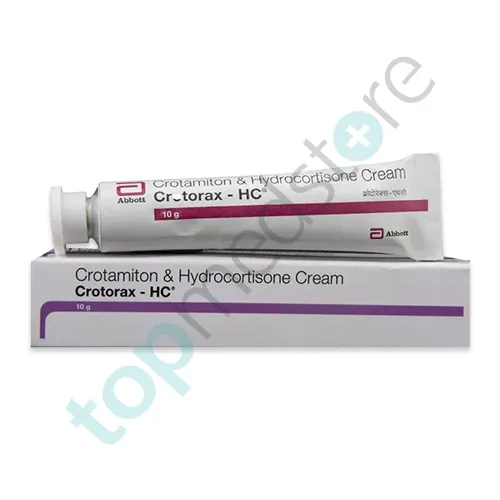
Crotamiton-Hydrocortisone 10%-0.25%-10g (Cream)
$30.90 – $101.20
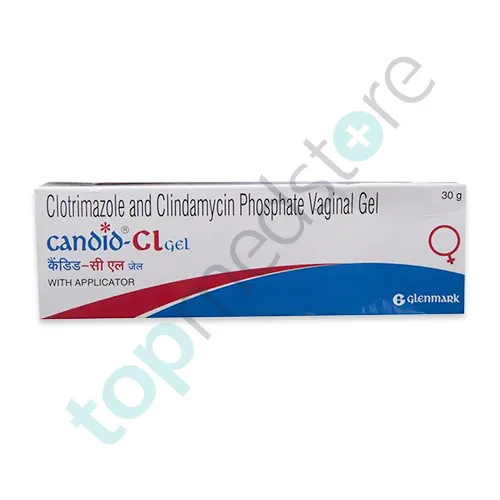
| Product name | Clindamycin-Clotrimazole Cream 30gm |
|---|---|
| Active Ingredient | Clindamycin-Clotrimazole |
| Dosage | 30gm |
| Drug Type | Tubes |
| Indication | Mixed Skin Infection |
| Manufacturer | Glenmark |
Clindamycin-Clotrimazole 30gm Cream
In stock
Total $59.40
Clindamycin–Clotrimazole Cream 30gm is a prescription combination skin medicine used to treat mixed skin infections caused by bacteria and fungi together. It is commonly prescribed by a dermatologist when a skin infection shows both redness, pus, irritation, and fungal overgrowth like itching or scaling.
This medicine contains two active ingredients that work in different ways but together help clear infection faster.
In simple words, this cream treats skin infections that involve both bacteria and fungus at the same time.
Skin infections can sometimes be caused by bacteria (tiny germs that cause pus, redness, and swelling) and fungi (microscopic organisms that grow in warm, moist areas and cause itching and scaling) at the same time.
When both are present, symptoms can become more persistent and harder to treat.
Clindamycin is an antibiotic. It works by stopping bacterial growth. It blocks the production of essential proteins that bacteria need to survive. Without these proteins, bacteria cannot multiply and gradually die.
Clotrimazole is an antifungal medicine. It works by damaging the fungal cell membrane. The cell membrane is like a protective layer around the fungus. When this layer is weakened, the fungus cannot survive or grow.
When both medicines work together, they reduce infection from both bacteria and fungi, allowing the skin to heal properly.
In simple words, this cream removes both bacteria and fungus so infected skin can recover faster.
This cream is mainly used for mixed skin infections, where both bacterial and fungal infections are present together.
It is commonly used for infected dermatitis or eczema, where existing skin inflammation becomes infected.
Doctors may prescribe it for fungal infections with secondary bacterial infection, which often happens in warm and moist skin areas.
It can also be used for infected rashes, itchy inflamed patches, or skin folds infections, where moisture increases the risk of both bacterial and fungal growth.
In real medical practice, dermatologists use this cream when a combined infection needs dual-action treatment for better and faster healing.
This medicine works in two different but complementary ways.
Clindamycin stops bacteria from making essential proteins. Without these proteins, bacteria cannot grow or survive, so the infection gradually reduces.
Clotrimazole weakens the fungal cell membrane. This membrane is important for keeping fungal cells alive. When it is damaged, the fungus cannot continue to grow.
Together, both actions reduce infection from two different sources at the same time.
In simple words, this cream targets both bacteria and fungus so the skin infection clears more effectively.
Most people tolerate this medicine well when used correctly.
Some may experience mild burning, itching, or redness at the application site, especially during early use.
In some cases, there may be dryness or slight skin irritation as the skin adjusts to the medicine.
Rarely, some people may develop allergic reactions, which can include increased redness, swelling, or rash.
If irritation becomes severe or does not improve, medical advice should be taken.
Most side effects are mild and temporary.
This cream should be used only under the guidance of a dermatologist.
Apply a thin layer only on the affected area and avoid using more than recommended.
Do not apply it on eyes, mouth, or deep open wounds.
It is important to complete the full course even if symptoms improve early, because stopping too soon may allow the infection to return.
Avoid using it unnecessarily or for longer than prescribed, as overuse may reduce its effectiveness over time.
Proper hygiene and keeping the skin dry can improve treatment results.
This content is for informational purposes only and does not replace medical advice, diagnosis, or treatment. Always consult your dermatologist before starting or changing any medicine.
$30.90 – $101.20
$59.40 – $194.40
$30.90 – $101.20