Capecitabine 500mg
$489.50 – $1602.00
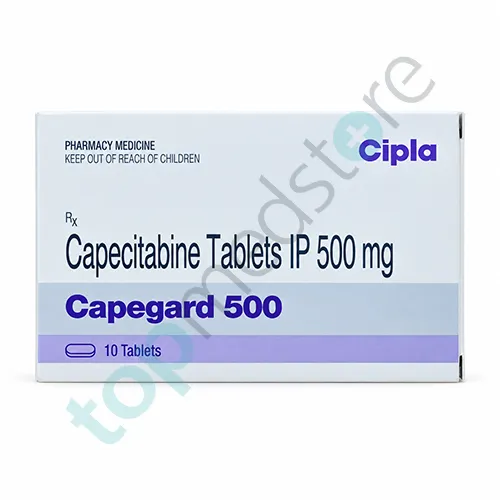
Capecitabine is a prescription anti-cancer medicine used to treat certain types of cancer, especially cancers of the breast, colon, and rectum. It is commonly prescribed by an oncologist (cancer specialist).
This medicine belongs to a group called chemotherapy drugs. Chemotherapy means medicines that slow down or stop the growth of cancer cells.
Capecitabine tablets are taken by mouth and work inside the body after being converted into an active cancer-fighting substance.
Cancer is a disease where abnormal cells grow in an uncontrolled way and can spread to other parts of the body.
Capecitabine works by stopping cancer cells from growing and dividing.
After you take the tablet, the medicine travels through the body and is changed into its active form inside cancer cells.
This active form blocks an important substance called DNA. DNA is needed for cells to grow and multiply.
When DNA production is blocked, cancer cells cannot divide properly. This slows down tumor growth.
Tumors are abnormal lumps of cancer cells that keep growing if not treated.
Because cancer cells grow faster than normal cells, they are more affected by Capecitabine medicine.
Over time, this helps shrink tumors or slow down cancer progression.
However, normal healthy cells can also be affected, which is why side effects may occur.
Doctors prescribe Capecitabine for specific types of cancer treatment, often as part of combination therapy.
It is commonly used in:
Breast cancer is a condition where abnormal cells grow in breast tissue.
Colorectal cancer affects the colon and rectum, which are parts of the digestive system.
Metastatic cancer means the cancer has spread from its original site to other parts of the body.
An oncologist decides the dose based on cancer type, stage, and patient condition.
This medicine is usually given in cycles, meaning periods of treatment followed by rest periods.
Capecitabine works by targeting fast-growing cells in the body, especially cancer cells.
Once inside the body, it is converted into a chemical called 5-fluorouracil (5-FU). This is the active form that fights cancer.
5-FU blocks the production of DNA and RNA. These are essential materials needed for cell growth and survival.
When cancer cells cannot make DNA or RNA, they stop dividing and eventually die.
Cancer cells divide much faster than normal cells, so they are more sensitive to this medicine.
However, some healthy cells like those in the stomach, mouth, and bone marrow can also be affected. This can lead to side effects.
Bone marrow is the part of the body that makes blood cells.
By slowing cancer growth, Capecitabine medicine helps control disease progression and improve treatment outcomes.
Like all chemotherapy medicines, Capecitabine may cause side effects because it also affects healthy fast-growing cells.
Common side effects include nausea, vomiting, diarrhea, loss of appetite, and fatigue. Fatigue means extreme tiredness.
Some patients may experience hand-foot syndrome, which causes redness, swelling, and pain on palms and soles.
Hand-foot syndrome can make walking or holding objects uncomfortable.
Capecitabine tablets may also reduce blood cell counts, which can increase the risk of infections or anemia.
Anemia means low red blood cells, which can cause weakness and shortness of breath.
Mouth sores and skin changes may also occur in some patients.
An oncologist monitors blood tests regularly to adjust treatment and reduce risks.
Patients should report any severe side effects immediately for proper management.
This content is for educational purposes only. It is not a substitute for professional medical advice, diagnosis, or treatment. Always consult an oncologist or qualified healthcare provider before using Capecitabine tablets for cancer treatment.
| Product name | Capecitabine |
|---|---|
| Category | Chemotherapy Medicines |
| Shipping offer | Free shipping on orders of $110.00 or more |
$489.50 – $1602.00
$25.80 – $84.00
$135.00 – $442.80
$588.00 – $1924.16