Calcium Acetate 667mg
$25.00 – $80.00
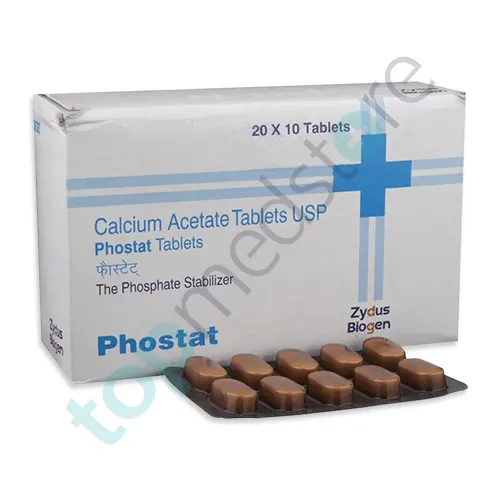
Calcium Acetate is a prescription medicine used mainly to control high phosphate levels in people with kidney disease. It is commonly prescribed by a nephrologist (kidney specialist).
This medicine is a phosphate binder. A phosphate binder is a drug that reduces the amount of phosphate absorbed from food in the body.
Calcium Acetate is usually taken with meals. It works inside the digestive system, not in the blood directly.
In chronic kidney disease, the kidneys cannot remove extra phosphate properly. This leads to high phosphate levels in the blood, which can weaken bones and damage blood vessels.
Calcium Acetate tablets or capsules help control this problem and protect bone and heart health.
Calcium Acetate works inside the intestines (digestive tract where food is broken down and absorbed).
When you eat food, it contains phosphate. Phosphate is a mineral needed for energy and bone health, but too much of it is harmful in kidney disease.
Calcium Acetate medicine binds to phosphate in the stomach and intestines. This binding forms an insoluble compound.
Insoluble means it cannot be absorbed into the blood.
The bound phosphate is then removed from the body through stool.
Because less phosphate enters the blood, phosphate levels decrease.
This helps reduce complications like weak bones, bone pain, and hardening of blood vessels.
Blood vessels are tubes that carry blood throughout the body. Too much phosphate can make them stiff and unhealthy.
Doctors prescribe Calcium Acetate mainly for patients with kidney-related mineral imbalance.
It is commonly used in:
Hyperphosphatemia means too much phosphate in the blood. This can happen when kidneys do not work properly.
Chronic kidney disease is a long-term condition where kidney function slowly reduces.
A nephrologist checks blood phosphate and calcium levels regularly and adjusts the dose based on test results.
This medicine is usually part of a complete kidney care plan that also includes diet control and dialysis in some patients.
Calcium Acetate works by reducing phosphate absorption from food.
When food enters the stomach and intestines, it releases phosphate. Normally, phosphate enters the blood and is removed by healthy kidneys.
In kidney disease, this removal process does not work properly, so phosphate builds up.
Calcium Acetate medicine binds with phosphate in the intestines. This creates a compound that cannot be absorbed.
This reduces the amount of phosphate entering the bloodstream.
As phosphate levels decrease, the risk of bone and heart problems also decreases.
Calcium from the medicine is also absorbed in small amounts, which helps maintain calcium balance in the body.
Like all medicines, Calcium Acetate may cause side effects in some people, especially if the dose is not properly balanced.
Common side effects include constipation, stomach upset, nausea, and mild bloating. Constipation means difficulty in passing stool.
Some patients may experience high calcium levels in the blood, especially if taken in high doses or combined with other calcium medicines.
High calcium levels can cause weakness, confusion, or frequent urination in severe cases.
In long-term use, doctors carefully monitor calcium and phosphate levels to avoid imbalance.
Rare side effects include loss of appetite or abdominal discomfort.
A nephrologist usually adjusts the dose based on regular blood tests to ensure safety and effectiveness.
This content is for educational purposes only. It is not a substitute for professional medical advice, diagnosis, or treatment. Always consult a nephrologist or qualified healthcare provider before using Calcium Acetate tablets or capsules for kidney disease or phosphate control.
| Product name | Calcium Acetate |
|---|---|
| Category | Chronic Kidney Disease Treatments |
| Shipping offer | Free shipping on orders of $110.00 or more |
$25.00 – $80.00
$142.80 – $467.60
$67.50 – $220.80
$67.50 – $467.60