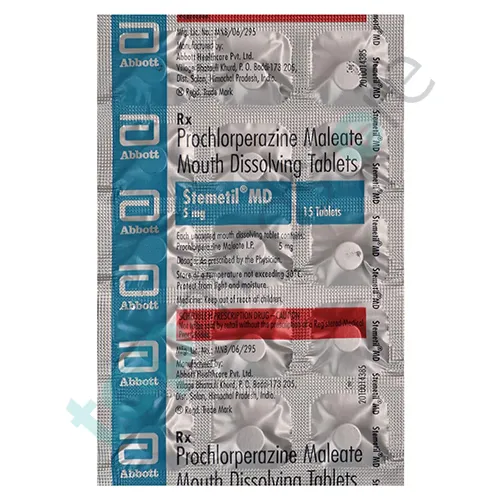
Prochlorperazine 5mg
$36.00 – $92.00
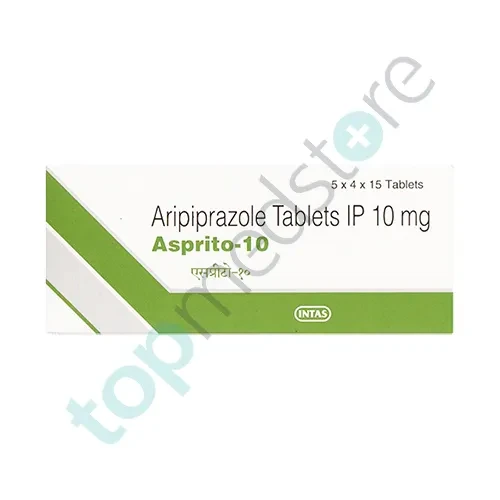
| Product name | Aripiprazole 10mg |
|---|---|
| Active Ingredient | Aripiprazole |
| Dosage | 10mg |
| Drug Type | Tablets |
| Indication | Schizophrenia |
| Manufacturer | Intas Pharma |
Total $54.00
Aripiprazole 10mg is a prescription antipsychotic medicine used to treat mental health conditions such as schizophrenia and bipolar disorder. It is commonly prescribed by a psychiatrist to help manage unusual thoughts, mood swings, and behavior changes. This strength is often used as a starting or maintenance dose, depending on the patient’s condition and response.
This medicine works in a balanced way on brain chemicals. It helps control symptoms without fully blocking normal brain activity.
In simple words, Aripiprazole 10mg helps stabilize mood, improve thinking, and reduce abnormal behavior.
The brain uses chemical messengers like dopamine and serotonin to control mood, emotions, and thinking.
In some mental health conditions, these chemicals become unbalanced. This can lead to symptoms like hallucinations (seeing or hearing things), confusion, mood swings, or lack of motivation.
Aripiprazole helps correct this imbalance. It works by adjusting how these chemicals behave rather than blocking them completely.
It acts as a partial agonist, which means it can both increase or decrease dopamine activity based on what the brain needs.
It also helps balance serotonin levels, which improves emotional stability.
In simple terms, this medicine helps bring brain chemicals back to a stable level so thoughts and mood become more controlled.
Aripiprazole 10mg is used to treat mental health conditions that affect thinking, mood, and behavior.
It is commonly prescribed for schizophrenia, where a person may experience hallucinations, delusions, or disorganized thinking.
It is also used for bipolar disorder, which causes extreme mood changes, including manic episodes (very high energy and activity) and depressive episodes (low mood and lack of interest).
In some cases, it is used as an add-on treatment for depression, especially when standard antidepressants are not enough.
It may also help reduce irritability and behavioral symptoms, improving daily functioning and social interaction.
In real-life use, doctors prescribe this medicine when symptoms need steady control with a balanced and tolerable dose.
Aripiprazole belongs to a group of medicines called atypical antipsychotics.
It works mainly on dopamine D2 receptors and serotonin receptors in the brain.
Instead of completely blocking dopamine, it partially activates and partially blocks it. This helps maintain a balanced level of brain activity.
This action reduces symptoms like hallucinations while also improving motivation and mood.
It also helps regulate serotonin, which supports emotional balance.
In simple words, this medicine stabilizes brain signals instead of shutting them down completely, which leads to better control of symptoms.
Most people tolerate this medicine well, but some side effects may occur, especially in the beginning.
A common side effect is restlessness (akathisia), which means feeling unable to sit still.
Some people may experience difficulty sleeping (insomnia).
You may feel nausea, which is a feeling of wanting to vomit.
Headache or dizziness may also occur.
In some cases, anxiety or mild agitation may be noticed initially.
Less commonly, there may be changes in appetite or body weight.
Rarely, muscle stiffness or unusual movements may occur and should be reported to a doctor.
Most side effects improve as the body adjusts to the medicine.
Aripiprazole 10mg should be taken under the supervision of a psychiatrist.
Do not stop the medicine suddenly, as symptoms may return or worsen.
Take it at the same time every day for consistent results.
Avoid alcohol, as it can increase dizziness and affect alertness.
Inform your doctor if you have diabetes, seizures, or heart problems before starting treatment.
Regular follow-ups are important to monitor your progress and adjust the dose if needed.
This medicine works best as part of a complete treatment plan that may include therapy and lifestyle support.
This content is for informational purposes only and does not replace medical advice, diagnosis, or treatment. Always consult your psychiatrist before starting or changing any medicine
$36.00 – $92.00
$96.30 – $315.60
$82.50 – $270.00
$106.00 – $348.00