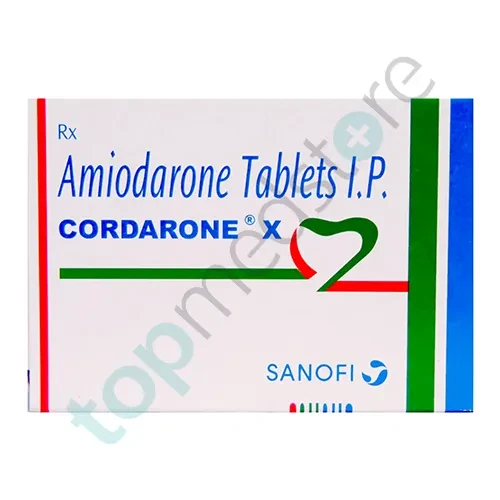
Amiodarone 100mg
$47.70 – $154.80
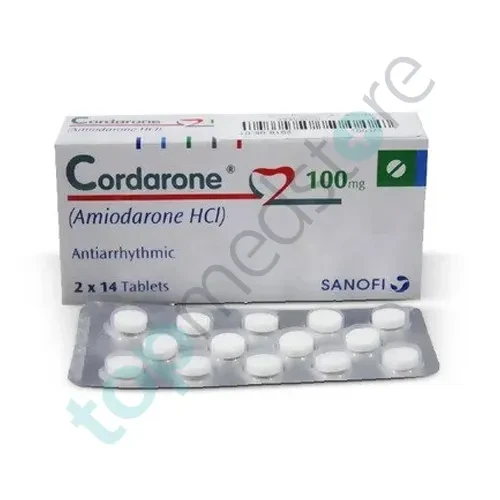
Amiodarone is a heart rhythm medicine used to treat serious irregular heartbeat (arrhythmia). Doctors such as a cardiologist, heart specialist, or electrophysiologist prescribe this medicine when the heart beats too fast, too slow, or in an uneven pattern that may affect blood flow and health. It belongs to a group of medicines called antiarrhythmic drugs.
Arrhythmia means the heart’s electrical system is not working properly. This can cause symptoms like palpitations (fast or strong heartbeat), dizziness, chest discomfort, shortness of breath, or fainting. Amiodarone helps stabilize the heart rhythm and prevent dangerous rhythm changes.
This medicine is available as tablets for long-term use and injections for emergency hospital treatment. Because it is a strong medicine with long-lasting effects, it is used only under strict medical supervision.
Amiodarone tablets are often used in chronic heart rhythm disorders, while injections are used in urgent situations such as life-threatening arrhythmias.
Amiodarone works by controlling the electrical signals in the heart. The heart beats because of electrical impulses that travel through heart muscle in a coordinated way.
In arrhythmia, these electrical signals become irregular or too fast. This disrupts normal blood flow and may reduce oxygen delivery to the body.
The medicine works by affecting ion channels in heart cells, especially potassium channels. These channels control how electrical signals move in the heart. By slowing these signals, Amiodarone helps restore a steady and normal heart rhythm.
It also affects sodium and calcium channels, which further stabilizes heart activity. This combined action makes it very effective for different types of serious arrhythmias.
The medicine works slowly but has a long duration in the body. Because of this, its effects may continue even after stopping the medicine.
Doctors may monitor heart rhythm regularly using ECG tests during treatment to ensure safety and effectiveness.
Amiodarone is used for treating serious and sometimes life-threatening heart rhythm disorders.
One major use of Amiodarone tablets is the treatment of atrial fibrillation (AF). Atrial fibrillation is a condition where the upper chambers of the heart beat irregularly and rapidly. It can cause palpitations, fatigue, and breathing difficulty.
Doctors also prescribe Amiodarone for ventricular tachycardia (VT). Ventricular tachycardia is a fast heart rhythm that starts in the lower chambers of the heart and can be dangerous if not controlled.
Another important use is the treatment of ventricular fibrillation (VF) in emergency settings. Ventricular fibrillation is a life-threatening condition where the heart beats in a chaotic way and cannot pump blood properly.
In some cases, Amiodarone is used when other antiarrhythmic medicines are not effective or suitable.
It is often part of a long-term treatment plan to prevent recurring episodes of abnormal heart rhythm.
Because of its strong effects, doctors carefully select patients who need this medicine.
Amiodarone works by slowing down electrical activity in the heart and stabilizing heart rhythm.
It blocks potassium channels in heart cells, which slows the recovery time of electrical signals. This helps prevent abnormal rapid heartbeats.
It also affects sodium and calcium channels, which reduces abnormal electrical activity and helps maintain a steady heartbeat.
In conditions like atrial fibrillation, Amiodarone helps convert irregular heart rhythm into a more regular pattern.
In dangerous ventricular arrhythmias, it helps prevent sudden abnormal electrical signals that can lead to cardiac arrest.
Because it stays in the body for a long time, it provides long-lasting control of heart rhythm. However, this also means side effects may persist for some time after stopping the medicine.
Doctors usually start treatment under close medical supervision and may adjust the dose based on ECG results and patient response.
Like all medicines, Amiodarone may cause side effects. Some can be mild, while others may be serious and require regular monitoring.
Common side effects include nausea, vomiting, constipation, dizziness, tiredness, and loss of appetite.
Some patients may experience changes in taste or mild skin sensitivity to sunlight. Skin may become more sensitive, so sun protection is important.
Long-term use of Amiodarone may affect the thyroid gland. The thyroid controls body metabolism. This can lead to either low or high thyroid hormone levels.
It may also affect the lungs in rare cases, causing breathing problems or lung inflammation. This is a serious side effect that requires immediate medical attention.
Other possible side effects include liver problems, vision changes, or slow heart rate.
Patients should have regular blood tests, liver tests, thyroid tests, and ECG monitoring during treatment.
Seek medical help immediately if symptoms like severe breathing difficulty, chest pain, yellowing of skin, or fainting occur.
This content is for educational purposes only and should not replace professional medical advice. Amiodarone should only be used under the supervision of a qualified healthcare professional such as a cardiologist, heart specialist, or electrophysiologist. Do not start, stop, or change the dose without medical supervision. Treatment requires regular monitoring because the medicine may affect the heart, lungs, liver, and thyroid function over time.
| Product name | Amiodarone |
|---|---|
| Category | Heart & Blood Pressure |
| Shipping offer | Free shipping on orders of $110.00 or more |
$47.70 – $154.80
$92.70 – $302.40
$46.80 – $153.60
$48.90 – $159.60